If you’ve been shopping for a no-fuss, single-serve coffee maker that won’t eat up half your counter, the Keurig K-Express is probably one of the first machines to show up in your search results. It sits toward the entry-level end of Keurig’s lineup, built around a simple idea: pick a cup size, drop in a K-Cup pod, and get a cup of coffee brewed in minutes.
This review looks at what the K-Express actually offers — its brew sizes, its Strong Brew setting, its 42-ounce reservoir, and its compact footprint — along with the things it deliberately leaves out, like a milk frother or temperature control. The goal isn’t to declare it “the best coffee maker ever” or talk you out of it either. It’s to walk through the K-Express’s real capabilities so you can decide whether it fits how you actually make coffee.
A quick note before we dive in: this review is based on the manufacturer’s published specifications, the official Keurig K-Express product page, publicly available user manuals, and independent reporting from outlets that have evaluated the machine, all clearly attributed where relevant. We have not personally lab-tested this specific unit, so we won’t invent brew times, taste scores, or durability results that we don’t have evidence for.
Keurig K-Express at a Glance
| Spec | Details |
|---|---|
| Type | Single-serve K-Cup pod coffee maker |
| Brew sizes | 8 oz, 10 oz, 12 oz |
| Water reservoir | 42 oz, removable |
| Strong Brew | Yes |
| Pod compatibility | Keurig K-Cup pods |
| Reusable filter compatibility | Compatible with the My K-Cup Universal Reusable Coffee Filter (sold separately) |
| Dimensions | Approximately 12.63″H x 4.56″W x 12.87″D (verify current measurements on the official listing before purchase) |
| Auto shutoff | Automatic shutoff after a period of inactivity, per Keurig’s specifications |
| Travel mug compatibility | Yes — removable drip tray accommodates larger mugs |
| Temperature control | Not available |
| Milk frother | Not included |
| Iced coffee function | No dedicated brew-over-ice mode on the standard K-Express |
| Carafe | Not included — single-serve only |
| Best suited for | Solo drinkers, couples, small kitchens, dorms, and offices |
Because Keurig periodically updates packaging and spec sheets, it’s worth double-checking exact dimensions and included accessories on the current Amazon listing or Keurig’s own product page before you buy.
Keurig K-Express Key Features
8-, 10-, and 12-Ounce Brew Sizes

- SIGNATURE COFFEES AND ESPRESSOS: 6 cup sizes, including 5, 8, 12, and 18 oz coffees, plus single and double espressos br…
- BOLD ICED COFFEES: Coffee Creations Button for a more concentrated brew over ice
- LARGE 47 OZ. MULTI-POSITION WATER TANK: adjusts to your kitchen layout for easy access and better space use.
The K-Express keeps its cup-size options simple: 8, 10, and 12 ounces, selected with a push of a button. The 8-ounce setting is the closest to a traditional “cup” of coffee and tends to produce the most concentrated flavor from a single pod, since less water is passed through the same amount of coffee grounds. Moving up to 10 or 12 ounces stretches that same pod across more water, which is convenient if you prefer a bigger mug, but it also means the coffee will taste comparatively milder unless you pair it with the Strong Brew setting.
There’s no continuous or custom-ounce dial here — you’re choosing between three fixed sizes, which keeps the interface simple but does mean less granular control than machines with adjustable brew volumes.
Strong Brew Button

- WHAT’S IN THE BOX: One water filter handle, and one filter to help ensure your beverages taste their absolute best.
- BREWS MULTIPLE CUP SIZES: 4, 6, 8, 10, 12oz Enjoy the most popular cup sizes.
- STRONG BREW: Brew a stronger, more intense cup.
Strong Brew is designed to slow down the brewing process slightly, giving the water more contact time with the coffee grounds inside the pod. Keurig markets this as a way to produce a bolder-tasting cup, particularly useful when brewing a 10- or 12-ounce cup where the coffee-to-water ratio would otherwise feel diluted.
It’s worth setting expectations here: Strong Brew adjusts extraction, not the amount of coffee inside the pod. It won’t turn a light-roast pod into a dark, intense brew, and the difference it makes will vary depending on the specific K-Cup you’re using. Think of it as a helpful adjustment rather than a guaranteed transformation.
42-Ounce Removable Water Reservoir
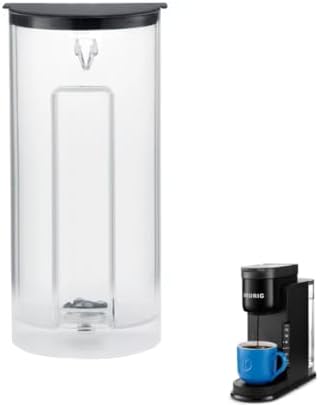
- Keurig K-Express coffee machines are one of the best brewers for making coffee at home. But like all coffee machines the…
- 42 oz. Water Tank lets you brew up to four 8 oz. cups before refilling, saving you time and simplifying your morning rou…
- This water reservoir is designed exclusively for the Keurig K-Express Single Serve Coffee Maker (coffee maker not includ…
The 42-ounce reservoir is one of the more genuinely useful specs on this machine, especially compared to some ultra-compact single-serve makers with 6- to 12-ounce tanks that need refilling after every cup. Based on the K-Express’s own capacity math, a full reservoir can generally support around four 8-ounce brews before you need to refill — fewer cups if you’re consistently brewing at the 12-ounce size, since more water is drawn per cup.
The exact number of cups you’ll get from a full tank depends on your chosen brew size and on some water being retained within the internal brewing mechanism, so treat “about four cups” as a practical estimate rather than an exact promise. Being removable also matters day to day: you can lift the tank out to fill it at the sink rather than pouring water awkwardly into a fixed opening, and it’s easier to rinse out periodically.
Compact Design
- 100% Microfiber (80% Polyester / 20% Polyamide)
- Washable & Reusable Multiple Times
- Produces No Lint
At roughly 12.6 inches tall, 4.6 inches wide, and 12.9 inches deep, the K-Express is built to sit comfortably on a narrow counter strip, a small desk, or a dorm-room shelf. The narrow width in particular is the spec that tends to matter most in small kitchens — many single-serve machines are wider than they are deep, and a few extra inches of counter width can be the difference between a machine fitting under a cabinet or not.
If counter space is genuinely tight, it’s worth measuring your intended spot against the current official dimensions before ordering, since even small coffee makers vary more than you’d expect between models.
Back-to-Back Brewing
Because the reservoir holds enough water for multiple cups, the K-Express supports brewing consecutive cups without needing to refill between each one. That’s a meaningful convenience for two-person households or small offices where more than one person wants coffee within the same short window — you’re not stuck refilling a tiny tank every single time someone wants a cup.
K-Cup Compatibility
The K-Express uses standard Keurig K-Cup pods, which is one of the platform’s biggest draws: an enormous variety of roasts, flavors, and brands, from mainstream grocery-store coffee to specialty roasters, plus teas, hot cocoas, and other pod-based drinks. If you already have K-Cups on hand from another Keurig machine, they’ll work here too.
My K-Cup Reusable Filter
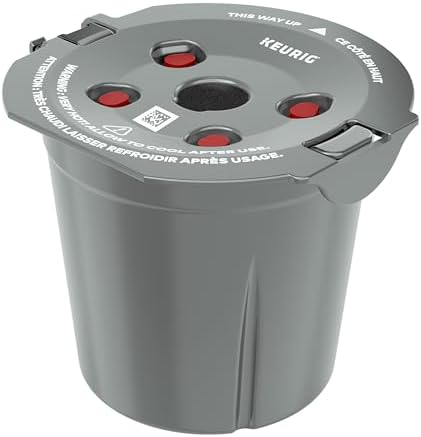
- BREW WITH GROUND COFFEE: Brew a single cup using your own favorite ground coffee
If you’d rather use your own ground coffee instead of buying pods, the K-Express is compatible with Keurig’s My K-Cup Universal Reusable Coffee Filter. This accessory is sold separately and isn’t included in the box, so factor that in if reusable brewing is a priority for you. It lets you fill a reusable pod with your preferred grounds, which can reduce long-term pod costs and cut down on single-use waste, though it also adds an extra cleaning step compared to popping in a disposable pod.
Auto-Off and Maintenance
Like most Keurig machines, the K-Express automatically powers down after a period of inactivity, which is a small but useful safety and energy-saving feature if you tend to forget to switch appliances off. Beyond that, ongoing care is straightforward: periodic reservoir cleaning, drip tray emptying, and occasional descaling to keep water flow and temperature performing as intended (more on that below).
Keurig K-Express Coffee Quality and Taste
Coffee quality on any K-Cup machine is largely a function of the pod you choose — the K-Express itself doesn’t add or subtract flavor so much as it determines how that pod’s coffee gets extracted. Because K-Cups span everything from mild breakfast blends to bold dark roasts, and from mainstream grocery brands to specialty small-batch roasters, your results will vary a lot depending on what you brew, not just which machine you brew it in.
A few realistic points worth keeping in mind:
- Brew size affects perceived strength. An 8-ounce cup from the same pod will generally taste more concentrated than a 12-ounce cup, simply because less water is used.
- Strong Brew adjusts extraction, not roast. It can help larger cups taste less watered-down, but it works within the limits of whatever pod you’re using.
- Pod coffee brews differently than fresh-ground coffee. Pre-ground, pre-measured pods trade some of the freshness and customization you’d get from grinding beans right before brewing, in exchange for convenience and consistency.
- This is not an espresso machine. The K-Express doesn’t generate the pressure needed for true espresso, and it shouldn’t be judged against espresso machines on crema, texture, or intensity.
In short: expect solid, convenient, consistent drip-style coffee that reflects whatever pod you put in it — not a dramatic flavor upgrade over other K-Cup brewers, and not a substitute for espresso or pour-over coffee.
How Fast Is the Keurig K-Express?
Keurig markets the K-Express around fast, minutes-long brewing, which is standard across most single-serve pod machines — the appeal of this format is largely about speed and simplicity compared to batch drip brewing or manual methods. Independent buying guides, such as The Coffee Maven’s hands-on K-Express review, have covered the model’s compact footprint and Strong Brew feature in more detail, and outlets like Consumer Reports evaluate Keurig-brand K-Cup coffee makers on lab-measured first-cup and repeat-cup brew speed as part of their broader single-serve coffee maker testing. We don’t have independently verified, published brew-time results specific to this exact model to cite here, so we won’t attach a specific number to it; if you come across a reputable outlet’s tested brew time, treat that as their measurement rather than an official Keurig figure or ours.
What we can say without needing a stopwatch is why that kind of speed matters in practice:
- Busy mornings: a quick brew-and-go cycle fits better into a tight morning routine than waiting on a full pot.
- Offices: individual cups on demand mean less waiting around a shared coffee station.
- Students and small households: less time spent on coffee prep before class or work.
- Multiple cups back-to-back: thanks to the larger reservoir, a second or third person doesn’t need to wait for a refill before brewing their own cup.
Keurig K-Express Ease of Use
The K-Express is built around a genuinely simple workflow:
- Fill the reservoir with fresh, cold water up to the fill line, then set it back in place.
- Insert a compatible K-Cup pod (or a filled My K-Cup reusable filter) into the pod holder.
- Select your desired cup size — 8, 10, or 12 ounces.
- Activate Strong Brew, if you want a bolder-tasting cup.
- Brew by pressing the brew button and letting the machine run its cycle.
- Remove the used pod and dispose of it (or empty and rinse the reusable filter).
- Clean and maintain the machine periodically — reservoir, drip tray, exterior, and occasional descaling.
There’s no app to configure, no programming menu, and no multi-step calibration. That simplicity is part of the appeal for anyone who wants a coffee maker they can use correctly on day one without reading a manual cover to cover.
Cleaning and Maintenance
Basic upkeep on the K-Express follows the same general pattern as most Keurig single-serve brewers:
- Reservoir: Remove it regularly and wipe down the inside and the underside of the lid with a damp, non-abrasive, lint-free cloth, then let it air-dry fully. Hand wash only — don’t put it in the dishwasher.
- Drip tray: Lift it off the base periodically, empty any accumulated liquid, and rinse it with a damp, soapy cloth.
- Exterior: Wipe down occasionally with a damp, soapy, non-abrasive cloth. Never submerge the machine itself in water or any other liquid.
- Descaling: Over time, mineral deposits from water build up inside the internal brewing pathway, which can slow brewing speed and affect temperature consistency. Keurig recommends descaling periodically using a liquid descaling solution labeled safe for coffee machines, following the frequency and process outlined in the official care guide for your specific model.
Rather than guessing at a maintenance schedule, it’s best to follow the descaling frequency and cleaning steps in Keurig’s official descaling guide and the specific care instructions for the K-Express, since recommendations can vary slightly by model and by your local water hardness — Keurig’s general guidance suggests descaling roughly every three to six months, or whenever a descale indicator light comes on for models that have one. If you want a broader walkthrough of coffee maker upkeep across different machine types, our best coffee makers for home use guide also touches on general care considerations worth knowing before you buy.
Keurig K-Express Pros and Cons
Potential pros:
- Compact, narrow footprint that fits small kitchens, dorms, and desks
- Simple, button-based controls with no learning curve
- Three brew sizes (8, 10, 12 oz) covering most everyday cup preferences
- Strong Brew setting for bolder-tasting larger cups
- Removable 42-oz reservoir supports several cups before refilling
- Wide variety of compatible K-Cup pods across brands and roast styles
- Compatible with the My K-Cup reusable filter for ground coffee (sold separately)
- Supports back-to-back brewing for multiple users
- Automatic shutoff for energy savings and peace of mind
Potential limitations:
- No built-in milk frother for lattes or cappuccino-style drinks
- No adjustable temperature control
- No carafe option — strictly single-serve
- No dedicated brew-over-ice function on the standard K-Express
- Ongoing K-Cup pod costs can add up compared to bulk-ground coffee
- Less brewing customization than higher-end Keurig models or specialty machines
Who Should Buy the Keurig K-Express?
The K-Express tends to make the most sense for:
- Solo coffee drinkers who want one good cup without any excess machine or extra features they won’t use.
- Couples or two-person households who benefit from back-to-back brewing without constant refilling.
- Apartment or dorm residents working with limited counter or shelf space.
- Office desks where a simple, low-maintenance brewer is more practical than a shared pot.
- K-Cup loyalists who already enjoy the pod ecosystem and want a straightforward, no-frills machine to use it with.
- Anyone prioritizing convenience and simplicity over programmability or advanced brewing features.
Who Should NOT Buy the Keurig K-Express?
The K-Express isn’t the right fit for everyone, and that’s fine — it’s simply a matter of matching the machine to your priorities. It’s probably not the best choice if you want:
- Freshly ground coffee as your primary method — while the My K-Cup filter supports grounds, the machine is fundamentally built around pod brewing.
- Advanced temperature control — there’s no way to adjust brew temperature on this model.
- Built-in milk frothing — you’ll need a separate frother or milk-frothing attachment for lattes or cappuccinos.
- Espresso-style brewing — the K-Express doesn’t produce true espresso.
- Carafe-style batch brewing — if you regularly serve coffee to a larger household or gathering, a drip machine will serve you better.
- Extensive customization — models with more brew settings, temperature adjustment, or programmable schedules exist elsewhere in Keurig’s lineup.
- Dedicated iced coffee brewing — the standard K-Express has no specific over-ice setting.
None of this makes the K-Express a bad machine — it just means it’s built for a specific kind of user, and it’s worth being honest about whether that’s you.
Keurig K-Express vs Other Keurig Coffee Makers
It helps to see where the K-Express sits relative to a few other popular Keurig models. As always, verify current specs directly with Keurig or the product listing before buying, since lineups and features can change.
Keurig K-Express vs K-Mini: The K-Mini is Keurig’s smallest and most minimalist brewer, typically limited to a single serving size at a time with a much smaller reservoir that essentially holds just enough water for one cup. The K-Express, by comparison, offers three brew sizes, Strong Brew, and a 42-oz reservoir that supports multiple cups without refilling — a meaningful step up in convenience for anyone who drinks more than one cup a day.
Keurig K-Express vs K-Classic: The K-Classic sits closer to the K-Express in spirit — both are straightforward, no-frills single-serve machines with a Strong Brew option. The main practical difference tends to be reservoir size, with the K-Classic offering a larger tank, which can mean fewer refills for higher-volume households, at the cost of a larger overall footprint.
Keurig K-Express vs K-Supreme: The K-Supreme line brings Keurig’s MultiStream Technology, which is designed to extract flavor more evenly across the pod, along with a larger reservoir and additional brew-size options. It’s aimed at buyers who want richer, more customizable results and are willing to pay more and accommodate a larger machine for it.
Keurig K-Express vs K-Select: The K-Select typically adds a bit more customization and a larger reservoir than the K-Express, along with a design geared toward slightly larger travel mugs. It’s a reasonable step up for buyers who want a bit more flexibility without jumping to a premium model.
Keurig K-Express vs K-Express Essentials: It’s easy to confuse these two given the shared name, but they are different machines. The K-Express Essentials line (and its Plus variant) is generally positioned with its own brew-size options and setup process, and in some versions includes iced coffee capability that the standard K-Express does not offer. If you’re comparing listings, double-check which exact model name and specifications appear on the product page — mixing up the two can lead to expecting features the machine you’re buying doesn’t actually have.
Across all of these comparisons, the throughline is this: the K-Express occupies an entry-to-mid position, offering more flexibility than the most stripped-down Keurig models while staying simpler and more affordable than the brand’s premium options.
Keurig K-Express vs a Traditional Drip Coffee Maker
The core trade-off between a single-serve machine like the K-Express and a traditional drip coffee maker comes down to how you actually drink your coffee:
- Convenience vs. batch brewing: The K-Express brews one cup at a time on demand; a drip machine brews a full pot at once, which is more efficient for households where several people want coffee simultaneously.
- Freshness: Drip machines using freshly ground coffee can offer more control over grind size and freshness; K-Cups trade some of that for consistency and speed.
- Serving size: Single-serve machines are ideal if only one or two people in the household drink coffee regularly; a pot from a drip machine that goes half-used tends to sit and lose quality.
- Cleanup: The K-Express involves discarding a used pod versus disposing of a paper filter and grounds — neither is particularly labor-intensive, but the pod route is arguably quicker.
- Cost over time: K-Cup pods generally cost more per cup than bulk ground coffee, though drip machines have their own costs in filters and can lead to waste when a pot goes unfinished.
- Countertop space: The K-Express’s narrow footprint tends to be smaller than many full-size drip machines, particularly ones with larger carafes.
If your household regularly needs multiple cups served at once, a drip machine may still be the more practical option — our comparison of drip coffee makers versus espresso machines breaks down more of those trade-offs in detail.
Keurig K-Express vs Nespresso
Keurig and Nespresso represent two different pod ecosystems built around different drink styles. Keurig’s K-Cup system, which the K-Express uses, is generally oriented toward drip-style coffee in larger cup sizes, along with teas, cocoas, and other beverages across an extremely broad range of brands. Nespresso’s capsule system, by contrast, is built primarily around espresso and espresso-based drinks, typically in smaller serving sizes, with many of its machines (particularly in the VertuoLine and OriginalLine families) designed around specific pressure or extraction technology suited to that format.
In practice, the right choice comes down to what you actually drink. If you mostly want a full mug of drip-style coffee with maximum brand and roast variety, the K-Express and the broader K-Cup ecosystem — including other options covered in our best single-serve coffee makers guide — are built for that. If espresso, lungo, or espresso-based milk drinks are more your habit, Nespresso’s format is generally the closer match. Neither brand is universally “better” — they’re solving for different everyday drinks.
Is the Keurig K-Express Worth It?
Whether the K-Express is worth buying comes down almost entirely to what you need from a coffee maker, rather than any universal verdict:
Is it good for small kitchens? Yes — its narrow footprint is one of its clearer strengths, and it’s a sensible fit for counters, dorm shelves, or office desks with limited space.
Is it good for one or two coffee drinkers? Generally yes. The reservoir size and back-to-back brewing support light daily use well without constant refilling.
Is Strong Brew useful? It’s a genuinely helpful option for larger cup sizes, though it works within the limits of whatever pod you’re brewing rather than transforming the coffee entirely.
Is the 42-oz reservoir practical? For most solo or two-person routines, yes — roughly four 8-ounce cups per fill is a reasonable convenience window before you need to top it off.
Is it suitable for people who want simplicity? This is arguably the K-Express’s strongest selling point — there’s very little to learn or configure.
Who should look at a more advanced machine instead? Anyone who wants built-in milk frothing, adjustable brew temperature, dedicated iced coffee functionality, or a carafe for serving multiple people at once will likely be better served by a step-up model like the K-Café, K-Supreme, or a traditional drip machine.
If you’re after an affordable, low-maintenance, space-efficient single-serve brewer and you don’t need the extras, the K-Express is a reasonable, practical option. If your coffee habits involve frothed milk, iced drinks, or serving a full household, it’s worth looking at a model built specifically for those needs.
[Check the current Amazon price and availability for the Keurig K-Express — insert your affiliate link here]
Frequently Asked Questions
How many ounces can the Keurig K-Express brew? It offers three fixed brew sizes: 8 oz, 10 oz, and 12 oz.
How big is the K-Express water reservoir? The reservoir holds 42 ounces and is fully removable for easier filling and cleaning.
Does the Keurig K-Express have Strong Brew? Yes. Strong Brew extends contact time between water and grounds to produce a bolder-tasting cup, particularly useful at larger brew sizes.
Can the K-Express use reusable K-Cup filters? Yes, it’s compatible with the My K-Cup Universal Reusable Coffee Filter, though that accessory is sold separately.
Does the K-Express make espresso? No. It’s a drip-style single-serve brewer and does not produce true espresso.
Can the K-Express make iced coffee? The standard K-Express does not include a dedicated brew-over-ice function.
Does the K-Express have a milk frother? No, it does not include a built-in frother. A separate frother would be needed for lattes or similar drinks.
How do you clean and descale a K-Express? Regularly wipe down the reservoir, lid, drip tray, and exterior with a damp, non-abrasive cloth, and descale periodically using a liquid descaling solution formulated for coffee machines, following Keurig’s official care guide for exact frequency.
Is the K-Express good for small kitchens? Yes — its compact, narrow design is one of its most practical advantages for tight counter space.
How does the K-Express compare with the K-Mini? The K-Mini is smaller and generally limited to single-cup water capacity with fewer brew-size options, while the K-Express adds three cup sizes, Strong Brew, and a larger 42-oz reservoir for multiple cups.
Does the K-Express automatically turn off? Yes, it includes an automatic shutoff feature after a period of inactivity, consistent with most Keurig single-serve machines.
This article contains affiliate links. If you purchase through these links, KitchenCraftersHub may earn a commission at no additional cost to you. Product specifications should be verified on the official Keurig listing or product page before purchase, as manufacturers periodically update features and packaging.