KitchenCraftersHub may earn a commission if you buy through links on this page, at no extra cost to you. See our affiliate disclosure. Prices and installation details below were researched in October 2026 and can change.
For most households, a countertop microwave is the better buy. It costs less, plugs into a regular outlet, and goes with you when you move. A built-in microwave earns its higher price in a narrower set of kitchens: you own the home, you are planning or reworking cabinets, and counter space is tight enough that giving up a cabinet bay is worth the money.
There is also a middle path that most comparison articles blur. Some countertop models are approved by their manufacturer for cabinet installation with a matching trim kit. Most are not, and the difference matters for safety. We cover that in detail below.
Quick guide:
- Choose countertop if you rent, move often, have a modest budget, or want the simplest setup.
- Choose built-in if you are remodeling, own your home, and want counters clear and appliances integrated.
- Consider a trim-kit conversion only if the manufacturer lists your exact microwave as compatible with a specific kit.
Countertop vs Built-In Microwave: Quick Comparison
| Factor | Countertop microwave | Built-in microwave |
|---|---|---|
| Appliance cost | Angi lists about $50 to $500 | Angi lists about $400 to $2,000 |
| Installation | None. Plug it in. | Cabinet or wall opening required; professional installation is commonly recommended; Angi cites $200 to $2,000 |
| Counter space | Uses counter space | Frees the counter |
| Cabinet space | None needed | Uses a cabinet bay or wall opening |
| Appearance | Visible appliance | Flush, integrated look |
| Portability | Move it or take it with you | Fixed in place |
| Repair and replacement | Unplug and swap in minutes | Replacement must fit the existing opening and trim |
| Capacity and features | Widest range of sizes and prices | Fewer models; similar features at higher prices |
| Best for | Renters, small budgets, flexible kitchens | Homeowners, remodels, tight counters |
Sources for the ranges: Angi’s 2026 microwave cost guide, updated July 2026. Angi’s own article gives slightly different built-in ranges in different sections, so treat these as ballparks, not quotes.
What Is a Countertop Microwave?
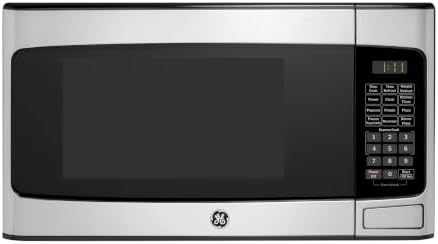
- Balanced capacity. Powerful performance: With a versatile 1.0 cu. ft. capacity and 1,050 Watts of cooking power, this mi…
- Trusted GE Performance: From quick breakfasts to late-night snacks, this GE countertop microwave delivers the reliable p…
- Simple One-Touch Controls: One-touch express cooking settings and 6 convenience cook settings provide easy operation for…
A countertop microwave is a freestanding unit that sits on a counter, shelf, or cart. It needs a nearby outlet and open space around it, and nothing else. Consumer Reports says to use an outlet dedicated to the microwave if you can, because sharing a circuit can trip the breaker.
This is the most common type, and it has the widest range of sizes, wattages, and prices. The Home Depot’s microwave type guide lists countertop capacities from 0.5 to over 2 cubic feet, with typical widths of 18 to 24 inches.
Who should buy one: renters, first-time buyers, anyone on a budget, and anyone who might rearrange the kitchen later.
The main drawbacks: it takes up counter space, and the appliance is always visible.
What Is a Built-In Microwave?
A built-in microwave is designed to sit inside cabinetry or a wall opening. Maytag’s built-in vs. countertop guide describes built-ins as usually installed in a wall or among cabinets, sometimes below a counter, and notes they require professional installation.
Home Depot says built-in exterior dimensions are similar to countertop models of comparable capacity. A built-in can also be placed away from the range, which gives a second person room to cook or grab a snack without crowding the stove.
Who should buy one: homeowners planning a remodel, people with very limited counter space, and anyone who wants a stacked, integrated look with a wall oven.
The main drawbacks: higher total cost, less flexibility, and more planning before you buy.
Countertop vs Built-In Microwave: 10 Important Differences
1. Purchase price and total cost
Countertop models cost less. Consumer Reports says small models in its ratings start around $60, and midsized ones run from just under $100 up to $500. Built-in appliances are typically priced higher before you add installation. The real gap shows up in the total, which we break down in the cost section below.
2. Installation requirements
A countertop unit needs an outlet. A built-in needs an opening sized to the manufacturer’s diagram, correct support, electrical access, and the right trim or finishing parts. Home Depot recommends professional installation for built-ins.
3. Counter and cabinet space
Built-ins trade counter space for cabinet or wall space. In a kitchen that has plenty of cabinets but little counter, that can be a smart trade. In a kitchen short on both, it may not be.
4. Kitchen appearance and design
Built-ins look cleaner, especially next to a wall oven or in a pantry wall. Countertop units are the more visible, less coordinated option, though many come in matching stainless finishes.
5. Cooking performance
Installation style does not determine how well a microwave heats. Consumer Reports points to wattage and features like sensors instead. Its tested microwaves start at 700 watts, and the models it recommends fall between 1,050 and 1,250 watts. A built-in is not automatically a better cooker, and a countertop is not automatically weaker. Compare the specific models.
6. Capacity and dish compatibility
Advertised cubic feet overstate what you can use. Consumer Reports found usable capacity on tested countertop models is about 50 to 60 percent of the manufacturer’s claim, because corners around the turntable do not count for much. Check turntable diameter and interior height against your biggest plate or casserole dish.
7. Features and controls
Sensor cooking, inverter power, convection, and child locks appear in both categories. Consumer Reports calls sensor cooking invaluable, and it cautions that convection and grill modes in the models it tested did not consistently match a traditional oven. If you want real baking and roasting, a wall oven or air fryer does that better. Our guide to air fryer vs convection oven explains the differences.
8. Cleaning and maintenance
Both types clean the same way. A countertop unit is easier to pull out and wipe behind. A built-in cleans in place, and any trim bottom panel or duct work may need to be moved aside if you want access to certain parts.
9. Repair, replacement, and portability
You can unplug a countertop microwave and carry it out. A built-in usually means removing trim, sliding the unit out of the opening, and finding a replacement that fits the same cutout. Angi puts a typical microwave life at about seven years, up to 11, and Consumer Reports says a properly used microwave should not need replacing more than once every 10 years. Since you may replace it once or twice in a long stay, a flexible opening is worth planning for.
10. Long-term value and flexibility
We could not find reliable data on resale value for a built-in microwave versus a countertop one, so we do not recommend counting on it. Judge the decision on use, space, and total cost instead.
How Much Does a Countertop vs Built-In Microwave Cost?
Here is a realistic cost picture using current published ranges. Prices vary by brand, capacity, features, location, and project complexity.
| Cost item | Typical range | Source and notes |
|---|---|---|
| Countertop microwave | $50 to $500 | Angi, updated July 2026. Consumer Reports shows small models from about $60 and midsized from just under $100 to $500. |
| Built-in microwave | $400 to $2,000 | Angi table. Its text elsewhere cites higher figures for premium models. |
| Microwave drawer | $1,000 to $1,400 before installation | Angi. Installation can be tricky. |
| Professional installation (built-in) | $200 to $2,000 | Angi. The high end covers cabinet customization. |
| Electrician, if you need a new outlet | Often $160 to $500 | Angi’s figure for an over-the-range electrician; use it as a rough proxy only. |
| Trim kit for a convertible countertop model | About $280 to $450 | Estimate from recent retailer listings for Panasonic’s 27-inch kit. Check current pricing for your model. |
A few points to keep in mind:
- A built-in appliance price tells you little until you add installation, trim, and any cabinet work.
- A convertible countertop microwave plus a trim kit can come in under a built-in, but the kit is its own line item, and Consumer Reports notes that some countertop models offer kits for a built-in look at a lower cost.
- Local labor rates and cabinet condition move the numbers more than the microwave brand does.
Can You Put a Countertop Microwave in a Cabinet?
- Balanced capacity. Powerful performance: With a versatile 1.0 cu. ft. capacity and 1,050 Watts of cooking power, this mi…
- Trusted GE Performance: From quick breakfasts to late-night snacks, this GE countertop microwave delivers the reliable p…
- Simple One-Touch Controls: One-touch express cooking settings and 6 convenience cook settings provide easy operation for…
Not unless the manufacturer says that exact model can be installed that way. This is the most important safety point in this article.
A standard countertop microwave expects open air around it. GE Appliances’ support guidance for its countertop-only models says they are intended for countertop use and should not be installed in tight or enclosed spaces like a cabinet. Blocking the vents can trap heat. Some models are different: the manufacturer designs them to be built in with a matching kit.
Freestanding vs approved for built-in
- Freestanding countertop models: open-air placement only.
- Convertible models: the manufacturer lists the model as compatible with a specific trim kit, and the kit includes ducting and support parts that manage airflow.
- True built-ins: designed for cabinet or wall installation from the start.
What a manufacturer-approved kit looks like
Panasonic’s official installation instructions for its 27-inch and 30-inch trim kits show how specific this gets:
- The kit is designed for use only with the Panasonic microwave series listed in the document.
- The cabinet opening dimensions and the height above the floor must match the diagrams for your kit.
- You are told not to alter or modify the kit or the microwave.
- The microwave must be used with a properly grounded three-prong outlet and unplugged during installation.
- Some models have a mechanical child-safety lock that must be deactivated before installation.
For one of those kits, the instructions call for an opening at least 21 inches deep and set at least 36¼ inches above the floor. Those numbers apply to that kit only. Another brand’s requirements will differ, so do not copy them.
The instructions list basic hand tools and a small drill, so a handy homeowner can often do the kit work. The opening still has to match the diagram exactly.
How to verify before you buy
- Find the exact model number of the microwave.
- Check the manufacturer’s trim kit compatibility list for that model.
- Read the kit’s installation instructions before ordering, including the cabinet opening size, depth, and support requirements.
- Confirm your electrical outlet location and grounding.
- If anything is unclear, ask the manufacturer or a licensed installer.
If the manufacturer does not list a kit for your microwave, keep it on the counter.
Which Is Better for a Small Kitchen?
It depends on what is scarce: counter or cabinet.
- Little counter, spare cabinet: a built-in or approved conversion can reclaim prep space. Home Depot and Maytag both call out counter space as the main reason to go built-in.
- Little of both: a compact countertop microwave is usually the practical choice. Check depth and door swing. Consumer Reports notes that standard cabinet spacing is 18 inches, so measure height under your upper cabinets as well.
- Ventilation: whichever you choose, follow the manufacturer’s installation manual for your specific model.
For compact picks, see our guide to the best microwaves for small apartments, which covers footprint, usable capacity, and noise.
Which Is Better for Apartments and Renters?
Countertop wins for nearly every renter. Maytag points to easy relocation as the reason, and the logic is simple: landlords rarely allow cabinet cutting or permanent changes, a countertop model costs nothing to install, and it moves with you at the end of the lease.
If your landlord has already installed a built-in or over-the-range microwave and it fails, ask them before buying a replacement. The fit and mounting are probably specific to that unit.
Which Is Better for a Kitchen Remodel?
A remodel is where a built-in makes the most sense. You can plan the opening, the outlet, and the cabinet height at the same time, instead of cutting into finished cabinets later.
Things to settle with your designer or contractor before ordering cabinets:
- The exact microwave model and its published opening dimensions
- Outlet location and any circuit requirements
- Installation height so it is comfortable for everyone using it
- Whether the trim or finishing parts are included or sold separately
- Who is responsible if the opening does not match the appliance
If you are not sure about a built-in, a compromise is to plan a shelf-height opening and install an approved convertible model. Verify the pairing first.
Countertop vs Built-In vs Over-the-Range Microwave
People mix up these terms, and so do many product listings.
| Type | Where it goes | Main trait |
|---|---|---|
| Countertop | On a counter or shelf | Freestanding, no installation |
| Built-in | In a wall or cabinet opening | Frees counter space, professional installation commonly advised |
| Over-the-range | Above the range or cooktop | Often serves as the range hood, depending on model and install |
| Drawer | Below a counter or wall oven | Food goes in from the top; Home Depot lists 24- or 30-inch widths |
Maytag explains that built-in and countertop microwaves work only as microwaves, while over-the-range models double as a hood vent. Home Depot adds that over-the-range venting can send air outside or recirculate it through a charcoal filter. Consumer Reports cautions that you should not expect an over-the-range unit to clear cooking fumes as well as a dedicated range hood, and that installation may require an electrician.
So an over-the-range microwave is not the same as a built-in, even though both are fixed in place.
Pros and Cons of Countertop Microwaves
Pros
- Lowest price and widest selection
- No installation
- Portable and easy to replace
- Good for rentals and temporary housing
- Easy to clean around
Cons
- Uses counter space
- Visible, less integrated look
- Needs open clearance as specified by the manufacturer
- Not a safe fit for an enclosed cabinet unless approved
Pros and Cons of Built-In Microwaves
Pros
- Frees up counter space
- Clean, integrated look
- Can be set at a comfortable height
- Pairs well with wall ovens and cabinetry
- Can be placed away from the range
Cons
- Higher total cost
- Installation and opening must match the manufacturer’s specs
- Harder to replace and less portable
- Fewer models to choose from
- Not ideal for rentals
How to Choose the Right Microwave for Your Kitchen
Work through this checklist before you shop.
- Measure the space. Width, depth, height, and door swing. For a countertop unit, check clearance under upper cabinets. For a built-in, use the manufacturer’s cutout diagram, not the box dimensions.
- Decide who is cooking. One person reheating leftovers needs a different microwave than a family cooking from frozen.
- Set a total budget. Include trim, installation, and electrical work for built-ins.
- Compare usable capacity. Look at turntable size and interior height, not just cubic feet.
- Pick a wattage range. Consumer Reports says a difference of 100 watts or so does not matter much. Higher wattage means faster, more even cooking.
- Look for sensor cooking if you reheat often.
- Check ventilation and clearance in the installation manual for that exact model.
- Confirm installation approval if you want a cabinet fit.
- Plan for repair and replacement. Think about how easy it will be to swap the unit in five to ten years.
- Check your outlet. Use a grounded outlet, ideally dedicated.
Final Verdict: Countertop or Built-In Microwave?
Choose a countertop microwave if you rent, are on a budget, move often, or just want the easiest option. It does the same job for far less, and you can take it with you.
Choose a built-in microwave if you own your home, are remodeling, and want counters clear. It is worth the extra installation expense when the opening is planned early and counter space is a daily frustration.
Consider a manufacturer-approved conversion if you want a built-in look without custom cabinetry. Verify the exact model and kit pairing first, and follow the instructions for the cabinet opening.
Skip the DIY cabinet shortcut. Do not wedge a standard countertop microwave into a cabinet and hope for the best.
If you are still undecided, a countertop model is the lower-regret choice. You can always upgrade later during a remodel.
Frequently Asked Questions
Is a built-in microwave better than a countertop microwave?
Not automatically. A built-in saves counter space and looks more integrated. A countertop costs less and is simpler to install and replace. The better choice depends on your kitchen, budget, and whether you own or rent.
Do built-in microwaves cook better?
No evidence supports that built-ins heat food better as a category. Cooking results depend on the model’s wattage, design, and features like sensors. Consumer Reports focuses on those factors, not the installation style.
Are built-in microwaves more expensive?
Usually, yes. Angi lists built-ins at about $400 to $2,000 versus $50 to $500 for countertop models, plus installation costs of about $200 to $2,000 for a built-in.
Can any countertop microwave be installed in a cabinet?
No. Only models the manufacturer approves for that use, with the matching trim kit. GE Appliances’ guidance for its countertop-only models is not to install them in tight or enclosed spaces.
Does a built-in microwave need a trim kit?
True built-in models are designed for an opening and may include their own finishing parts, though some use a separate trim kit. Convertible countertop models need the manufacturer’s matching kit. Check your model’s documentation.
How much clearance does a built-in microwave need?
It varies by model, so read the installation manual. As an example, one Panasonic trim kit lists a minimum 21-inch opening depth and a minimum 36¼ inches from the floor. That applies only to that kit.
Which microwave is best for a small kitchen?
A compact countertop model works for most small kitchens. A built-in helps if you have spare cabinet space and limited counter. See our small apartment microwave guide for sizing advice.
Is a built-in microwave easier to clean?
Not really. The interior cleans the same way. A countertop unit is easier to move for cleaning around it.
Can you replace a built-in microwave with a countertop model?
Sometimes, but not by simply dropping it into the opening. You would need a model approved for that opening with the right trim kit, or you would place the microwave on a counter and close up the opening.
Is an over-the-range microwave the same as a built-in microwave?
No. An over-the-range microwave mounts above the cooktop and may also serve as a range hood. A built-in goes into a wall or cabinet and only works as a microwave.
SEO DELIVERABLES (do not publish)
1. SEO title (55 characters)
Countertop Microwave vs Built-In Microwave (2026 Guide)
2. Meta description (150 characters)
Countertop microwave vs built-in microwave: compare costs, installation, trim kits, and cabinet safety to pick the right fit for your kitchen in 2026.
3. Suggested URL slug
countertop-microwave-vs-built-in-microwave Important: this is the slug of an existing, published page. See the cannibalization note below before deciding. If you publish as a separate page instead, use something distinct such as countertop-vs-built-in-microwave-cost-installation-guide.
4. Primary keyword
countertop microwave vs built-in microwave
5. Secondary keywords
countertop vs built-in microwave; built-in microwave pros and cons; countertop microwave pros and cons; built-in microwave cost; countertop microwave installation; built-in microwave installation requirements; microwave for small kitchens; built-in microwave vs countertop microwave; microwave trim kit; best microwave for your kitchen
6. Featured image concept and alt text
Concept: a split-view kitchen photo or illustration. On the left, a stainless countertop microwave on a clear counter next to a coffee maker. On the right, a flush built-in microwave in cabinetry beside a wall oven. No text overlay needed. Alt text: Side-by-side kitchen showing a countertop microwave on a counter and a built-in microwave set into cabinetry
7. Verified internal URLs used
All four pages were found on the live site (home page, page 2, 3 and 4 listings, and direct fetches) in October 2026.
- https://kitchencraftershub.com/affiliate-disclosure/ (appears in the site-wide navigation)
- https://kitchencraftershub.com/best-microwaves-for-small-apartments-2026/ (fetched directly; used twice)
- https://kitchencraftershub.com/air-fryer-vs-convection-oven/ (listed on the live site and linked from the apartments guide)
- Not used: https://kitchencraftershub.com/best-air-fryers-for-home-use/ (live, but no natural place in this article)
Only three distinct internal pages are linked, because I could not find more that fit. Please confirm the affiliate disclosure URL manually in your WordPress admin.
8. The five external URLs used and what each supports
- https://www.consumerreports.org/appliances/microwave-ovens/buying-guide/ — usable capacity (about 50 to 60% of claims), wattage guidance, small-model pricing, sensor and convection notes, standard 18-inch cabinet spacing, 10-year life estimate, kits for a built-in look.
- https://www.homedepot.com/c/ab/types-of-microwaves-for-your-kitchen/9ba683603be9fa5395fab90aa83bf96 — countertop and built-in sizes and capacity, professional installation recommended, drawer details, over-the-range venting.
- https://www.angi.com/articles/how-much-does-microwave-cost.htm — cost ranges for countertop, built-in, drawer, installation, electrician, and lifespan.
- https://help.na.panasonic.com/wp-content/uploads/2023/02/nntk722_tk732_tk922_tk932_f0313be04ap_eng_fre.pdf — Panasonic’s official trim kit installation instructions; model-specific compatibility, opening dimensions, grounding, child-lock deactivation.
- https://www.maytag.com/blog/kitchen/built-in-vs-countertop-microwave.html — built-in vs countertop vs over-the-range definitions, renters, trim kits, professional installation.
GE Appliances’ support page (products.geappliances.com, contentId=21668) is referenced in the text without a link so the external link count stays at five. I fetched it and confirmed its wording.
9. Content-gap summary (competitors actually reviewed)
Reviewed in full: Consumer Reports buying guide, The Home Depot types guide, Angi cost guide, Maytag comparison article, Panasonic trim kit installation PDF, GE air clearance page. Reviewed only as search snippets: Amana’s guide, Town Appliance’s blog, Best Buy Canada’s guide, AJ Madison and Wayfair category pages. Several other results were low-quality auto-generated wiki pages, which I disregarded.
What this article adds:
- Total ownership cost in one table, with sources and a clear note that Angi’s own figures are inconsistent.
- Trim-kit safety specifics drawn from a primary manufacturer document, including child-lock deactivation and grounding, which the brand blogs skip.
- Usable capacity and wattage guidance from tested data, not manufacturer claims.
- A clear definition of built-in vs over-the-range vs drawer.
- A decision path for renters, small kitchens, and remodels, plus a verification process before buying a convertible model.
- It explicitly avoids unsupported claims about cooking performance, resale value, and universal clearance numbers.
Gaps in my research: the search tool returned a limited set of results, and I did not get usable Google-style results for all eight of your queries (for example, “countertop microwave vs built-in microwave resale value” and “best microwave for a small kitchen” returned nothing I could verify). The competitor review is therefore smaller than your 5 to 10 target, and I have not claimed more.
10. Final verification checklist
- Internal links: affiliate disclosure (from site navigation), apartments guide (fetched, loads), air fryer vs convection oven (listed on live site)
- Exactly five unique external links in the article body, each linked once
- Installation claims come from Panasonic’s installation PDF, Maytag, Home Depot, and GE guidance, and each is labeled model-specific where relevant
- No universal clearance figure is given; the one set of numbers is labeled as one specific Panasonic kit
- No invented prices, tests, quotes, ASINs, or affiliate URLs
- You need to confirm: the trim kit price range ($280 to $450) is a snapshot from retailer search listings with no reliable date. Verify before publishing, or delete that row.
- You need to confirm: the affiliate disclosure URL in WordPress
- Add affiliate links yourself if you want them. I did not include any because I could not verify current availability for a specific microwave and kit pairing. The Panasonic NN-TK722S kit (listed for NN-SE7S, NN-SD7S, NN-SN7S, and NN-ST7S series per the official PDF) is a documented pairing you could build a product box around once you verify a matching microwave is in stock.
PUBLISHING NOTES: ISSUES I FOUND ON YOUR SITE
- Keyword cannibalization. You already have a published page on this exact topic: https://kitchencraftershub.com/countertop-microwave-vs-built-in-microwave/ (published September 25, 2026, titled “…Which Is Right for Your Kitchen in 2026?”). Publishing this as a second page would compete with it. Best option: replace the existing page’s content with this article at the same URL and update the title. Otherwise differentiate the angle and slug.
- The existing page gives universal clearance numbers. It states roughly 3 inches on the sides and top and 1 inch at the rear for countertop microwaves. That wording is from GE’s guidance for its own countertop-only models, not a universal rule, and it conflicts with your “no universal clearances” requirement. I would remove it or attribute it clearly.
- Duplicate microwave pages.
/best-microwaves-for-small-apartments-2026/and/best-microwaves-for-small-apartments-2026-2/both exist with near-identical titles. There is also a duplicate air fryer buying guide (-2026and-2026-2). Consider consolidating with redirects. - No “Best Microwaves for Small Kitchens” page found on the pages I checked (home page and page listings 1 to 4). I linked the small apartments guide instead.
- Possible affiliate-link mismatches on the small apartments page. Several product headings do not match the Amazon box beneath them (for example, the Toshiba EM131A5C-BS section shows a BLACK+DECKER air fryer combo link, the Breville section shows a COMFEE’ link, and the Panasonic NN-SN651B section shows an NN-SN75LB link). Worth a manual check, since mismatched links can hurt trust and violate Amazon’s guidelines.
- Angi’s built-in cost range is inconsistent inside its own article ($400 to $3,500, $180 to $2,000, and $400 to $2,000 all appear). I used its summary table and flagged it in the text.