Discover the best coffee makers for home use in 2026, including drip, single-serve, programmable, and espresso machines for delicious coffee every day.
If your current coffee maker is making you dread mornings instead of look forward to them, it’s probably time for an upgrade. The good news: you don’t need to spend a fortune or become a home barista to get a genuinely great cup at home. You just need the right machine for your household, your kitchen, and your coffee habits.
This guide breaks down the best coffee makers for home use in 2026 by the way real buyers actually shop — by budget, household size, kitchen space, and coffee style — rather than just handing you a generic top-10 list. Every recommendation below is based on verified manufacturer specifications and information gathered from established testing publications, not on hands-on brewing performed by KitchenCraftersHub. Where a claim comes from independent testing, we say so. Where it’s based on specs and reviews, we say that too.
Quick Comparison of the Best Coffee Makers for Home Use
| Coffee Maker | Type | Capacity | Best For | Programmable | Carafe Type | Grinder | Approx. Price Range | Overall Rating |
|---|---|---|---|---|---|---|---|---|
| Technivorm Moccamaster KBGV Select | Drip | 10 cups | Best Overall | No | Glass | No | $350–$400 | 4.7/5 |
| Cuisinart Coffee on Demand DCC-3000NAS | Drip (cup-by-cup) | 12 cups | Best Budget / Best Programmable | Yes | None (insulated reservoir) | No | $140–$170 | 4.0/5 |
| OXO Brew 8-Cup Coffee Maker | Drip | 8 cups | Best for Beginners / Best Thermal Carafe | No | Thermal | No | $200–$230 | 4.3/5 |
| Breville Grind Control BDC650BSS | Drip with grinder | 12 cups (60 oz) | Best Coffee Maker With Grinder | Yes | Thermal | Yes (conical burr) | $380–$400 | 4.4/5 |
| Nespresso Vertuo Lattissima | Single-serve pod | 1 cup (multiple sizes) | Best Single-Serve | No | N/A | No | $500–$530 (often discounted) | 4.2/5 |
| Keurig K-Mini | Single-serve pod | 1 cup (6–12 oz) | Best for Small Kitchens | No | N/A | No | $80–$100 | 3.9/5 |
| Breville Bambino Plus | Espresso | Single/double shot | Best Espresso Machine for Home | No | N/A | No | $400–$500 | 4.5/5 |
Prices reflect typical retail ranges seen across major retailers at the time of writing and can change; check current listings before buying. We did not find reliable, up-to-date figures for every possible configuration, so treat these as a starting point rather than a guarantee.
Best Coffee Makers for Home Use: Our Top Picks
Not every “best” coffee maker is best for you. Below are the machines that stand out for specific kinds of buyers, based on verified specs and what reputable testers have reported.
Best Overall: Technivorm Moccamaster KBGV Select
- WHAT’S INCLUDED — 6 Double Rolls of Scott Paper Towels, 108 sheets per roll (6 double rolls = 12 regular rolls)
- GET THE JOB DONE FAST — Each paper towel has deep-cleaning ridges for fast and easy cleaning
- VIRTUALLY LINT FREE — Scott leaves surfaces virtually lint free for a simple, efficient clean
The Moccamaster has topped independent buying guides for years, and testers who revisited it in 2026 found it still holds up against newer releases, according to Tom’s Guide’s coffee testing team. It’s hand-built in the Netherlands, uses a copper heating element to hit the Specialty Coffee Association’s target brew temperature range quickly, and is certified to that standard. That certification matters in practice: it means the machine is independently verified to extract coffee within the time and temperature window most likely to produce a balanced cup, rather than something scorched or under-extracted.
Best Budget: Cuisinart Coffee on Demand DCC-3000NAS

- Universal Fit: Compatible with all Keurig coffee makers: K-Slim, K-Supreme, K-Duo, K-Classic, K-Elite, K-Select, K-Cafe,…
- High Quality Filter Material: Organic coconut shell activated charcoal certified by NSF standards removes impurities, ca…
- Advanced Processing Technology: Dust-free process; Individually packaged; Sterilisation; And beautiful box makes it easy…
At around $150 direct from Cuisinart, the DCC-3000NAS is fully 24-hour programmable, has an adjustable auto shutoff, a self-clean cycle, and a removable water reservoir — features that are often locked behind a higher price point on competing brands. Instead of a traditional carafe, it holds up to 12 cups in an insulated reservoir and dispenses coffee cup by cup at the push of a lever, which keeps coffee hot without a warming plate scorching it.
Best for Families: Cuisinart Coffee on Demand DCC-3000NAS
- REUSABLE COFFEE FILTER FOR KEURIG K-DUO – Designed to fit K-Duo Brewers, Keurig K-Duo Essentials, and K-Duo Hot & Iced. …
- STOP BUYING PAPER FILTERS – Replace disposable filters with one reusable solution. Save money over time while reducing w…
- RICHER, FULLER COFFEE FLAVOR – Fine mesh design allows natural coffee oils to pass through, giving you a deeper, more ar…
The same cup-by-cup design that makes this machine budget-friendly also makes it practical for households where people are drinking coffee at different times all morning. Nobody has to babysit a warming plate, and the coffee gauge shows how many cups are left before someone needs to start a new batch.
Best for Beginners: OXO Brew 8-Cup Coffee Maker

- Gold Cup Certified: BetterBrew precision technology ensures water hits the grounds at 194 F – 205 F, meeting the Special…
- Keep your coffee hot: Double-wall vacuum-insulated thermal carafe locks in heat and flavor for hours.
- Single-serve capability: Use the optional brew basket for quick and easy solo cups.
Some machines overwhelm new coffee drinkers with settings. The OXO Brew intentionally doesn’t: you fill the tank, add grounds, and press start. Reviewers at Tom’s Guide called it extremely easy to use while also being SCA-certified, which is an unusually good combination at this price. The trade-off is that the water tank isn’t removable, so filling it requires pouring water in directly rather than filling a detachable reservoir at the sink.
Best for Small Kitchens: Keurig K-Mini

- SPECIALTY COFFEE ASSOCIATION (SCA) CERTIFIED: Subjected to rigorous testing by top coffee experts, The Top Drip Coffee M…
- COFFEE REFINED TO YOUR TASTE: The 10-cup coffee maker includes Accu-Brew mode with strength settings, cup count, and bui…
- EASILY WEAVE PERFECT COFFEE MOMENTS INTO YOUR DAY: Program mode on the Lotus drip coffee maker automatically brews your …
At under 5 inches wide, the K-Mini is built for tight counters, dorm-style kitchens, and shared office nooks. It has no permanent water reservoir — you add water fresh for each brew — which keeps its footprint small but means it’s genuinely a one-cup-at-a-time machine, not a fit for anyone who wants a full pot on standby.
Best Programmable Coffee Maker: Cuisinart Coffee on Demand DCC-3000NAS
- REUSABLE COFFEE FILTER FOR KEURIG K-DUO – Designed to fit K-Duo Brewers, Keurig K-Duo Essentials, and K-Duo Hot & Iced. …
- STOP BUYING PAPER FILTERS – Replace disposable filters with one reusable solution. Save money over time while reducing w…
- RICHER, FULLER COFFEE FLAVOR – Fine mesh design allows natural coffee oils to pass through, giving you a deeper, more ar…
Between the 24-hour advance brew start, adjustable auto shutoff, and a 1–4 cup setting for smaller batches, this machine covers the programmable features most home buyers actually look for without pushing the price toward $300+.
Best Single-Serve Coffee Maker: Nespresso Vertuo Lattissima

- ENJOY CAFÉ-QUALITY ESPRESSO: Experience the bold, rich flavor of homemade espresso and skip long café lines with the Cra…
- BE YOUR OWN BARISTA: This expertly crafted coffee machine takes your morning cup to the next level. With two shot basket…
- YOUR IDEAL BREW: Customize your coffee bar with an espresso maker that brews how you like it. Using the touch control pa…
If you want a single-serve machine that also handles milk-based drinks well, the Vertuo Lattissima pairs Nespresso’s capsule system (which auto-adjusts brew size and extraction per capsule) with a separate milk frother that can be stored in the fridge between uses. Tom’s Guide’s testers highlighted the milk steaming quality and ease of cleaning, though they noted the waste bin fills quickly and the machine sits at a higher price point than most single-serve options.
Best Thermal Carafe Coffee Maker: OXO Brew 8-Cup Coffee Maker
- WHAT’S INCLUDED — 6 Double Rolls of Scott Paper Towels, 108 sheets per roll (6 double rolls = 12 regular rolls)
- GET THE JOB DONE FAST — Each paper towel has deep-cleaning ridges for fast and easy cleaning
- VIRTUALLY LINT FREE — Scott leaves surfaces virtually lint free for a simple, efficient clean
The double-walled thermal carafe keeps coffee hot for a couple of hours without a hot plate, which protects flavor better than machines that leave coffee sitting on a heating element.
Best Coffee Maker With Grinder: Breville Grind Control BDC650BSS

- Generous Capacity: 10-cup capacity allows you to brew enough coffee for the whole family or multiple servings throughout…
- Built-in High Performance Conical Burr Grinder: Ensures consistent grinding for optimal flavor extraction from your favo…
- Large and Transparent Bean Hopper: Capacity up to 7.5oz allows you to monitor bean levels and refill as needed
This is the machine coffee-focused review sites consistently point to when comparing integrated grind-and-brew machines. It pairs a stainless steel conical burr grinder with a 60-ounce/12-cup thermal carafe, eight strength settings, a pre-ground bypass option, and a programmable auto-start with an LCD display for grind time, cup count, and strength. You can brew straight into the carafe, a tall mug, or a travel cup. The trade-off, per independent reviews, is that the built-in grinder’s adjustment range is narrower than a good standalone burr grinder — it’s optimized for drip, not espresso-fine grounds.
Best Espresso Machine for Home: Breville Bambino Plus
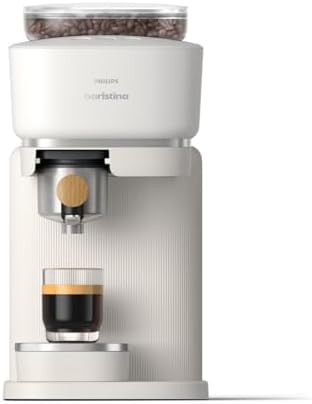
- REAL ESPRESSO, MADE SIMPLE: Baristina grinds, tamps, and brews with a 16-bar pressure pump to extract a robust flavor fr…
- SWIPE. BREW. ENJOY: Swipe the handle and let Baristina do the rest. Coming from bean to cup all in less than 60 seconds.
- TINY – YET MIGHTY! Compact enough for any kitchen counter, powerful enough for barista-style coffee.
The Bambino Plus has remained one of the most recommended entry-level espresso machines for years because its automatic milk-steaming actually works well, according to Tom’s Guide’s testing team, and its footprint is compact enough for a standard kitchen counter. It doesn’t include a grinder, so budget for a separate one if you want fresh-ground shots — pre-ground coffee in a double-walled portafilter basket can still produce a reasonable espresso if you’d rather skip that step initially.
How Much Coffee Maker Do You Actually Need? Household-Size Guidance
Manufacturer “cup” counts are almost always based on a 5-ounce coffee-cup measurement, not the 8- to 12-ounce mugs most people actually drink from. A “12-cup” coffee maker is closer to 7 real mugs of coffee. Keep that gap in mind when sizing a machine to your household:
- 1–2 people: A single-serve pod machine (Keurig K-Mini, Nespresso Vertuo Lattissima) or a compact 8-cup drip machine like the OXO Brew avoids waste from brewing more than you’ll drink before it goes stale or cold.
- 3–4 people: A 10–12 cup drip machine, like the Moccamaster KBGV Select or Cuisinart DCC-3000NAS, comfortably covers a household without multiple brew cycles most mornings.
- 5–6 people: Look at a 12-cup machine with a thermal carafe or an insulated cup-by-cup reservoir (Cuisinart DCC-3000NAS, Breville Grind Control) so coffee stays fresh-tasting across a longer serving window instead of scorching on a hot plate.
- Larger households or frequent guests: Consider a machine with a larger reservoir and either a thermal carafe or programmable second brew, or run a drip machine alongside a single-serve unit so different preferences don’t create a bottleneck.
- Offices/shared kitchens: A cup-by-cup dispenser like the Cuisinart DCC-3000NAS or a durable pod system removes the awkwardness of one person “finishing the pot” without starting a new one.
Small-Kitchen Guidance
Countertop space is often the real deciding factor, more than brew quality. A few things worth checking before you buy:
- Countertop footprint and height: The Keurig K-Mini is under 5 inches wide, making it one of the most compact options here. Espresso machines like the Breville Bambino Plus and De’Longhi La Specialista Touch are also built with tighter kitchens in mind, according to reviewer measurements, but check clearance if your machine will sit under upper cabinets.
- Water-tank access: Machines with a top-loading or removable reservoir (Cuisinart DCC-3000NAS, Breville Grind Control) are easier to refill in a cramped kitchen than ones requiring you to pour water in from a fixed opening, like the OXO Brew 8-Cup.
- Storage practicality: Single-serve machines with built-in pod storage, like the Keurig K-Mini Plus, cut down on counter clutter from loose pod boxes.
If you’re rethinking your whole small-kitchen appliance lineup rather than just the coffee maker, our guide on how to choose the right air fryer for a small kitchen covers a lot of the same footprint and clearance questions.
Cleaning and Maintenance
Every coffee maker on this list needs some routine upkeep, but how much varies a lot by type.
Drip machines generally need the carafe or reservoir washed after each use, the filter basket rinsed or replaced, and the machine descaled periodically to prevent mineral buildup — a process most manufacturers recommend every 1–3 months depending on water hardness, though you should always check the specific machine’s manual rather than assume a universal schedule. The OXO Brew 8-Cup’s carafe is removable and easy to hand-wash, but its non-removable water tank means limescale prevention depends more on regular descaling than on removing and scrubbing parts. The Cuisinart DCC-3000NAS has a self-clean cycle and a removable reservoir, which simplifies things.
Grind-and-brew machines like the Breville Grind Control add one more component: the grinder and bean hopper. Coffee oils can build up in the hopper over time, so it needs periodic wiping in addition to the usual carafe and filter cleaning.
Single-serve pod machines are typically the lowest-maintenance option day-to-day — no grounds, no paper filters — but the internal water lines still need occasional descaling, and needle/exit-point clogs are a common complaint if that step gets skipped.
Espresso machines need the most consistent attention: daily rinsing of the portafilter and steam wand, and regular descaling of the boiler. Skipping steam-wand cleaning in particular is one of the most common reasons milk-frothing performance degrades over time.
If you’re used to keeping up with cleaning a blender properly, the same basic principle applies here: a five-minute daily habit prevents the kind of buildup that eventually needs a much more involved deep clean.
Coffee Maker Running Costs
The sticker price is only part of what a coffee maker costs you over time.
- Paper filters: Cheap, but an ongoing cost that reusable metal filters (like the ones in the Moccamaster and OXO Brew) eliminate.
- K-Cup and Nespresso pods: According to Tom’s Guide, K-Cup pods typically run $7 to $14 per 12-pack depending on the brand, which works out to noticeably more per cup than brewing the same coffee from ground beans. If you drink multiple cups a day, that difference adds up fast — something worth weighing seriously if a single-serve machine is mainly appealing for convenience rather than genuine single-cup need.
- Reusable pod filters: Some single-serve machines, including the Keurig K-Mini, are compatible with reusable “My K-Cup”-style filters that let you brew your own ground coffee, cutting the per-cup cost significantly at the expense of some convenience.
- Descaling solution: A recurring but minor cost across nearly every machine type, typically needed a handful of times a year.
- Replacement carafes and parts: Glass carafes on drip machines eventually crack or get discontinued; thermal and stainless carafes hold up longer but cost more to replace if something does go wrong.
- Grinders: Built-in grinders (Breville Grind Control) save you from buying a separate grinder, but a dedicated burr grinder paired with a basic drip machine can sometimes work out cheaper — and grind more precisely — than an all-in-one unit, depending on which models you compare.
We’re not going to hand you a made-up “annual cost” figure, since that depends heavily on how much coffee you drink, your local water hardness, and which pods or beans you buy. As a rule of thumb, though, ground coffee brewed at home is consistently the cheapest per-cup option, pods are the most convenient but priciest per cup, and built-in grinders and thermal carafes are upfront costs that tend to pay for themselves in better-tasting coffee rather than lower running costs.
Drip vs. Single-Serve vs. Espresso: Which Is Best?
Drip Coffee Makers
Best for everyday pots of coffee and families who want a full carafe ready at once. Wide range of prices and features; the main downside is that a full pot can go stale or bitter if it sits too long on a hot plate.
Programmable Coffee Makers
Best for anyone who wants coffee brewing before they’re even out of bed. Almost all mid-range and higher drip machines now include this; check whether the auto-start is a simple single daily timer or a full 24-hour advance schedule.
Single-Serve Coffee Makers
Best for convenience, minimal cleanup, and households where people drink coffee at different times. The tradeoff is per-cup cost and, in most cases, less control over strength and flavor than grounds-based brewing.
Espresso Machines
Best for espresso-based drinks like lattes and cappuccinos. Entry-level machines like the Bambino Plus can produce genuinely good shots, but there’s a learning curve around tamping, dialing in grind size, and steaming milk that drip and pod machines don’t have.
Coffee Makers With Grinders
Best for people who want fresher coffee without adding a second countertop appliance. You give up some of the grind precision a standalone burr grinder offers, but for most everyday drip coffee, that trade is a reasonable one.
Coffee Quality vs. Convenience
There’s a real tradeoff here, and it’s worth being honest about it rather than pretending one type of machine “wins” everything:
- Coffee quality tends to favor SCA-certified drip machines and manual espresso machines, where you control grind, ratio, and temperature.
- Convenience clearly favors single-serve pod machines and superautomatic espresso machines — minimal cleanup, no measuring, consistent (if not always exceptional) results.
- Customization is highest with manual drip machines and semi-automatic espresso machines; lowest with basic pod machines.
- Cleaning is easiest with pod machines, hardest with espresso machines.
- Price spans the widest range in espresso, from around $400 for the Bambino Plus into the thousands for enthusiast-grade machines.
- Learning curve is close to zero for pod and basic drip machines, and real for espresso — expect some wasted shots while you learn.
If you mostly want reliable, good coffee with minimal thought, a solid drip machine or single-serve pod system will serve you better day-to-day than an espresso machine that demands attention every time you use it.
How We Evaluate Coffee Makers
We didn’t personally brew and test every machine in this guide. Instead, our evaluations are built from verified manufacturer specifications and the hands-on testing published by outlets like Tom’s Guide and Consumer Reports, which is disclosed throughout this article wherever a specific performance claim is made. When you’re comparing coffee makers yourself, these are the factors worth paying attention to:
- Brewing temperature and consistency: Coffee brewed too cool tastes weak and sour; too hot, and it tastes burnt. The SCA’s certified range is 196–205°F.
- Brew time: Too fast under-extracts; too slow over-extracts and can taste bitter.
- Carafe performance: Does it keep coffee hot without continuing to “cook” it on a hot plate?
- Programmability: Does the auto-start actually work as advertised, and is it easy to set?
- Ease of use and cleaning: How many removable parts, and are they dishwasher-safe?
- Noise: Especially relevant for espresso machines with built-in grinders.
- Countertop footprint and water reservoir design: Can you actually fit it, and can you refill it without wrestling with cabinets?
- Long-term usability and value: Warranty length, availability of replacement parts, and brand reliability history.
How to Choose the Right Coffee Maker for Your Home
Start with how you actually drink coffee, not how you imagine you might drink it. If you brew one cup most mornings and rarely have guests, a single-serve or compact drip machine will serve you better than a 12-cup carafe you refill halfway. If mornings in your house involve multiple people wanting coffee at different times, a cup-by-cup dispenser or a machine with a good thermal carafe avoids the “half a pot going stale” problem.
From there, weigh:
- Budget — both the upfront price and the ongoing cost of filters, pods, or beans.
- Counter space — measure before you buy, including clearance under cabinets.
- How much control you want — pod machines trade control for convenience; manual drip and espresso machines offer more control at the cost of more effort.
- Cleaning tolerance — be honest about whether you’ll actually descale a machine every few months or clean a steam wand daily.
How Much Should You Spend on a Coffee Maker?
Based on the machines covered here, a reasonable range by category looks like this:
- Budget drip: $60–$150 gets you a reliable, no-frills programmable machine like the Cuisinart DCC-3000NAS.
- Mid-range drip: $200–$400 covers SCA-certified machines with thermal carafes or built-in grinders, like the OXO Brew 8-Cup or Breville Grind Control.
- Premium drip: $350+ for machines like the Moccamaster, where you’re paying for build quality, longevity, and brewing precision as much as features.
- Single-serve pod: $80–$200 for most machines, more if you want integrated milk frothing like the Nespresso Vertuo Lattissima.
- Entry espresso: $400–$700 for a genuinely capable semi-automatic machine.
- Superautomatic/bean-to-cup espresso: $700–$1,500+ depending on features.
Spending more doesn’t automatically mean better coffee for your specific situation — a $150 programmable drip machine that fits your routine will make you happier day-to-day than an espresso machine you don’t have time to use properly.
Frequently Asked Questions
What is the best coffee maker for home use in 2026? For most households, the Technivorm Moccamaster KBGV Select remains the top all-around pick thanks to its brewing consistency and durability, though the right choice really depends on your household size and coffee style.
What type of coffee maker makes the best coffee? SCA-certified drip machines and well-dialed-in manual espresso machines generally produce the highest quality coffee, since both give you (or the machine) precise control over temperature and extraction.
What is the best coffee maker for a family of four? A 10–12 cup programmable drip machine, such as the Cuisinart DCC-3000NAS or Technivorm Moccamaster, comfortably covers a family without multiple brew cycles most mornings.
What is the best coffee maker for beginners? The OXO Brew 8-Cup is a strong beginner option — it’s SCA-certified but requires almost no setup or decision-making to use well.
Is a programmable coffee maker worth it? For most households, yes — having coffee ready when you wake up is one of the more genuinely useful conveniences a coffee maker can offer, and it’s now a common feature even on budget machines.
Is a thermal carafe better than a glass carafe? Thermal carafes keep coffee hot for longer without a hot plate continuing to cook it, which generally preserves flavor better over a few hours. Glass carafes are easier to clean and see fill levels in, but rely on a warming plate that can eventually make coffee taste burnt if it sits too long.
What is the best coffee maker for a small kitchen? The Keurig K-Mini is the most compact option covered here, at under 5 inches wide, though the Breville Bambino Plus and De’Longhi La Specialista Touch are also built with tight counters in mind for espresso drinkers.
Are single-serve coffee makers worth it? They’re worth it for convenience and minimal cleanup, especially in households with different coffee preferences. The tradeoff is a higher per-cup cost than brewing from ground coffee.
Is a coffee maker with a grinder worth buying? If freshly ground coffee matters to you and you don’t want a separate grinder taking up counter space, yes — the Breville Grind Control is a well-regarded option. Just know the grind range is narrower than a dedicated burr grinder.
How often should a coffee maker be cleaned? Daily rinsing of removable parts, with a full descaling every 1–3 months depending on your water hardness and how often you brew — always check your specific machine’s manual, since recommendations vary by model.
How long should a good coffee maker last? This varies widely by build quality and type. Machines with a multi-year manufacturer warranty, like the Moccamaster’s 5-year coverage, are generally a signal the manufacturer expects long-term reliability, though actual lifespan also depends heavily on how consistently you descale and maintain the machine.
Final Verdict
If you want one machine that does everyday drip coffee well and will likely outlast several cheaper machines, the Technivorm Moccamaster KBGV Select is the safest overall pick. If budget is the priority, the Cuisinart DCC-3000NAS delivers real programmability and convenience for a fraction of the price. Small kitchens and single-cup drinkers are best served by the Keurig K-Mini, while anyone chasing fresher coffee without a separate grinder should look at the Breville Grind Control. And if espresso-based drinks are the goal, the Breville Bambino Plus remains one of the most capable entry points into home espresso without an enthusiast-level price tag or learning curve.
Whichever direction you go, match the machine to how you actually drink coffee — not how a spec sheet makes it look on paper — and you’ll get a lot more use out of it than the machine currently gathering dust in a lot of kitchen cabinets.
SEO Title
Best Coffee Makers for Home Use in 2026: Top Drip, Single-Serve & Espresso Picks
Meta Description
Compare the best coffee makers for home use in 2026 — top drip, single-serve, programmable and espresso machines for every budget and kitchen size.
URL Slug
/best-coffee-makers-for-home-use-2026
Suggested Featured Image Alt Text
Row of top-rated 2026 coffee makers including a drip machine, single-serve pod brewer, and espresso machine on a kitchen counter
Suggested Internal Link Anchors Used
- how to clean a blender properly
- how to choose the right air fryer for a small kitchen
Pingback: Drip Coffee Maker vs Espresso Machine in 2026: Which Is Better for Taste, Cost, Convenience, Coffee Types & Everyday Home Use? - kitchencraftershub.com
Pingback: Keurig K-Express Coffee Maker Review - kitchencraftershub.com