Scroll through any kitchen appliance forum and you’ll find the same debate on repeat: should you buy a Ninja that costs a fraction of a Vitamix and does 80% of the job, or is that missing 20% exactly why serious home cooks keep paying $400–$700 for the Vitamix name? It’s not a simple “budget vs. premium” story, either. Some Ninja models genuinely hold their own against entry-level Vitamix blenders in specific tasks, while certain Vitamix machines are overkill for someone who just wants a decent morning smoothie.
This guide breaks the decision down by what you actually use a blender for — ice, greens, hot soup, nut butter, cleanup, noise, and long-term durability — instead of handing you a one-line verdict. By the end, you should know exactly which brand, and which tier within that brand, fits the way you actually cook.
Ninja vs Vitamix at a Glance
| Factor | Ninja | Vitamix |
|---|---|---|
| Typical price tier | ~$100–$300 for most full-size models | ~$350–$800+ depending on series |
| Motor power | 1,000–1,400 peak watts, varies by model | 2–2.2 HP (roughly 1,200–1,500 running watts), varies by model |
| Container capacity | Commonly 64–72 oz, varies by model | Commonly 48–64 oz, varies by model |
| Personal/single-serve cups | Included with most Kitchen System bundles | Not typically included; Vitamix doesn’t make personal blenders |
| Food processor attachment | Included on Kitchen System models | Sold separately as an add-on for select series |
| Speed control | Preset programs plus a handful of manual speeds, varies by model | Variable-speed dial with 10 speeds on most models |
| Presets/auto programs | Auto-iQ or BlendSense presets on most current models | Program buttons only on Ascent/Smart Series models |
| Pulse | Yes | Yes |
| Ice crushing | Very good to excellent | Good to excellent, varies by model |
| Fibrous ingredients (kale, celery) | Good, occasional stringy bits | Excellent, near-total breakdown |
| Nut butter | Possible on higher-wattage models, more manual effort | Easier, more consistent, varies by model |
| Hot blending (soup via friction) | Not supported on most models | Supported on most full-size models |
| Cleaning | Dishwasher-safe parts on most models | Self-cleaning cycle plus dishwasher-safe lids |
| Noise | Loud during ice crushing, varies by model | Loud at top speed, varies by model |
| Build quality | Good for the price, mostly plastic components | Sturdier, metal drive coupling on most models |
| Warranty | Typically 1 year | 5, 7, or 10 years depending on series |
| Best suited for | Budget-conscious buyers, families wanting an all-in-one kitchen system | Buyers who blend daily, want hot soup and silky purées, and want a machine that lasts a decade-plus |
Keep in mind that both brands sell dozens of models, so any single spec can vary — where that’s the case, we’ve noted it below rather than presenting one number as universal.
Brand Positioning and Price Tiers
Ninja, made by SharkNinja, built its reputation on mid-range kitchen systems that bundle a blender, personal cups, and a food processor bowl into one box, usually for $100–$300. The pitch is versatility and value: you get several appliances’ worth of function without several appliances’ worth of cost.
Vitamix, based in Cleveland, Ohio, occupies the high-performance end of the market. Its entry-level Explorian series starts a bit above $350, while its touchscreen Ascent and A-series machines run $500–$800 or more. Vitamix’s positioning has always been “buy once, use for a decade or longer,” and its pricing reflects that.
Neither brand is strictly “better” on price alone — a $200 Ninja Kitchen System and a $400 Vitamix Explorian solve different problems. If you’re deciding between the two, our guide to immersion blenders vs. countertop blenders is worth a look first, since it may turn out you don’t need a full-size countertop machine of either brand at all.
Design and Build Quality Compared
Vitamix blenders generally use a metal gear coupling between the base and the container, which resists wear better over years of daily use than the plastic drive systems common on more affordable blenders. Vitamix jars are also typically praised for surviving accidental drops, thanks to thicker, denser plastic (or optional stainless-steel containers on Ascent models).
Ninja containers are lighter and less expensive to replace, which is a fair trade-off for the price, but several review outlets have found them more prone to cracking if dropped from height. Independent testing has found that Vitamix blenders tend to be sturdier and easier to clean than comparable Ninja models, a pattern that shows up across multiple model matchups rather than being a one-off result. RTINGS
That doesn’t mean every Ninja feels flimsy — the higher-end Kitchen System models have a reasonably solid base — but if build quality and long-term durability are a priority, this is one area where Vitamix has a consistent edge across its lineup.
Motor Power: Why Wattage Alone Doesn’t Determine Performance
It’s tempting to compare a “1,400-watt Ninja” to a “2.2 HP Vitamix” and assume bigger numbers win. In practice, peak wattage (how Ninja typically advertises power) and continuous horsepower (how Vitamix typically advertises power) aren’t directly comparable units, and neither number alone predicts how smooth your smoothie will be.
What actually matters more is torque under load, blade geometry, and how the container shape moves ingredients back toward the blades. A blender with a slightly lower peak-watt rating but a container designed to create a strong vortex can outperform a higher-wattage model with a poorly shaped jar. This is why Vitamix, despite motors that aren’t dramatically more powerful on paper than some Ninja models, consistently produces smoother results with fibrous or frozen ingredients — the container and blade design are doing real work alongside the motor.
Blade Design and Blending Mechanism

- 5.3QT STAINLESS STEEL BOWL: The polished 5.3-quart capacity easily handles large batches: mix dough, cake batter, and up…
- 3 VERSATILE ATTACHMENTS: Includes a stainless steel whisk, dough hook, and flat beater with silicone edge for efficient,…
- 12 OPTIMIZED SPEED SETTINGS: Precision control lets you gently fold, thoroughly mix, or power through thick doughs for f…
Vitamix uses a laser-cut, four-pronged blade with blunt, slightly tapered edges. It relies on speed and the container’s vortex shape rather than razor sharpness — the blade essentially pulls ingredients through repeatedly until they’re broken down, and every Vitamix ships with a tamper to push thick mixtures back down into the blades while the lid is on.
Ninja’s signature design is a tall, stacked tower of sharper blades that sit at multiple heights inside the pitcher, aiming to process ingredients at several points in the container at once rather than relying purely on vortex action. This can be effective for chopping and ice crushing but tends to leave slightly more texture in fibrous ingredients compared to a Vitamix, since there’s no tamper to force stuck material back down.
Neither design is objectively “correct” — they’re different engineering philosophies, and the practical differences mostly show up in the specific-use breakdowns below.
Both brands make good smoothies with soft fruit, yogurt, and liquid. Where they diverge is with whole ingredients like spinach stems, celery, or frozen berries with skins — Vitamix tends to leave a noticeably smoother finish, while Ninja smoothies can carry slightly more texture unless you pre-chop tougher ingredients.
Frozen Fruit Performance
Frozen fruit is a stress test for any motor. Full-size Ninja Kitchen Systems handle standard frozen fruit smoothies well, especially with their Auto-iQ pulse-and-pause programs designed for this exact task. Vitamix generally needs less liquid to achieve the same smoothness because of its stronger vortex action, which some users prefer for thicker, spoonable smoothie bowls.
Ice Crushing

- Precision Crushed Ice with Stainless Steel Blades: Built-in premium stainless steel blades deliver even, customizable ic…
- Sturdy Non-Slip Design for Stable Use: Features heavy-duty non-slip legs that keep the ice crusher firmly in place while…
- Effortless Hand Crank Operation: Smooth, easy-to-turn handle takes the strain out of ice crushing—no muscle power needed…
This is one category where Ninja is genuinely competitive with, and sometimes preferred over, entry-level Vitamix models. Ninja’s Total Crushing blade assembly and high peak wattage are specifically tuned for pulverizing ice into a fine, snow-like texture quickly. Our dedicated guide to the best blenders for crushing ice covers this in more depth, including which specific models perform best. In side-by-side testing, an entry-level Vitamix has outperformed a comparable Ninja in most categories, but the Ninja held a slight edge specifically at crushing ice — a useful reminder that “better overall” doesn’t mean “better at everything.” RTINGS
Frozen Drinks
Margaritas, daiquiris, and other frozen cocktails ask for the same thing as ice crushing plus a bit more volume. Both brands handle this well; Ninja’s larger stock pitchers (commonly 72 oz) can be an advantage for entertaining, while Vitamix’s stronger vortex tends to produce a more uniformly slushy texture rather than one with occasional ice shards.
Leafy Greens and Fibrous Ingredients
This is where Vitamix separates itself most clearly. Kale stems, celery strings, and other fibrous produce get broken down almost completely in a Vitamix, thanks to the combination of motor torque, blade design, and tamper use. Ninja can handle greens fine for everyday green smoothies, but tougher stems and strings are more likely to survive the blend.
Nut Butter
Making nut butter from scratch (almond, peanut, or cashew) asks a lot of any blender: it requires sustained high torque against thick, sticky content with no added liquid. Vitamix models, especially those with a tamper, generally manage this more consistently. Higher-wattage Ninja models can produce nut butter, but it typically takes more stopping, scraping, and patience, and results vary more by model.
Hummus and Thick Mixtures
- An Amazon brand
- USDA Certified Organic
- QAI Certified Organic – If It’s Organic It’s Non-GMO
Similar story to nut butter — thick, low-liquid mixtures are easier in a Vitamix because the tamper lets you keep feeding ingredients into the blades without stopping the machine. Ninja’s food processor bowl (included on Kitchen System models) is actually a better tool for hummus than the blender pitcher itself, since a processor blade handles thick pastes more naturally than a blender blade tower.
Hot Soups and Hot Blending
- Pre-Purchase Note – This Heavy-duty blender high-capacity appliance has a total assembled height of 18.7 Inch (48 cm) an…
- 1500W HIGH-SPEED BLENDING & 8-BLADE CRUSHING – Powered by a heavy-duty 1500W motor, this high speed countertop blender p…
- 800W HOT SOUP MAKER & 24H PRESET DELAY TIMER – Engineered with an 800W built-in heater and a thermal-shock resistant hig…
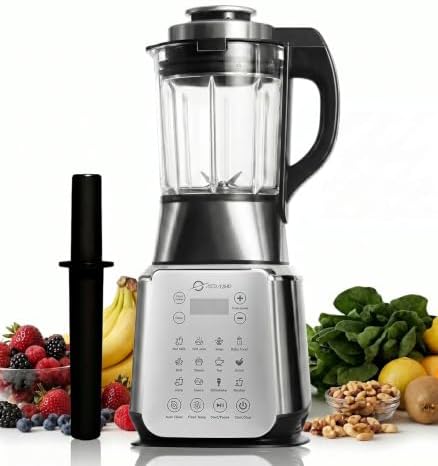
Most full-size Vitamix models can turn raw vegetables into hot, steaming soup using nothing but blade friction — run it on high for several minutes and the heat generated is enough to serve immediately. This is a genuine category advantage for Vitamix. Most Ninja blenders are not designed or rated for this; blending hot liquids in a standard Ninja pitcher isn’t recommended, and Ninja’s dedicated hot-blending models (like its Foodi Cold & Hot Blender line) use a separate heating element rather than friction, which is a different mechanism entirely.
Sauces and Purées
Both brands do well here for standard sauces and purées. Vitamix again produces a marginally silkier finish on things like tomato sauce or pesto, while Ninja is perfectly capable for everyday use and offers the food processor attachment as an alternative tool for chunkier sauces.
Personal and Single-Serve Blending
- PULSE TECHNOLOGY POWER: The powerful 700-watt push-to-blend motor base powers through everything in the cup for the best…
- NUTRIENT EXTRACTION* DRINKS: Unlock hidden vitamins and nutrients from whole fruits and veggies, blending even the porti…
- BLENDS FROZEN INGREDIENTS: Crush ice and pulverize frozen ingredients for resort-like frozen drinks, smoothies, shakes, …
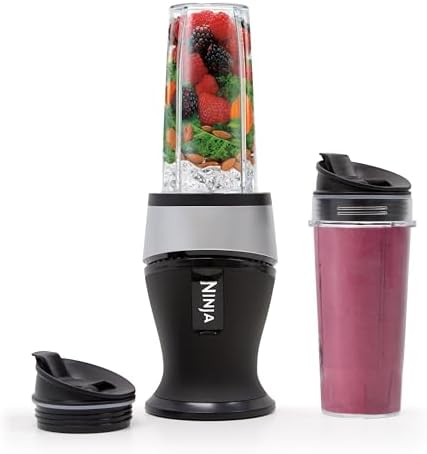
Ninja has a clear advantage for anyone who wants grab-and-go smoothies. Most Kitchen System bundles include one or two personal cups with spout lids, so you can blend directly into a portable container. Vitamix doesn’t make personal blenders at all — its containers start at roughly 32–48 oz, which is more than most people want for a single smoothie.
Large Family Batches

- WHERE THERE’S SMOKE, THERE’S S’MORES! Elevate your s’mores game with our unique organizer. This tray features fixed comp…
- CUSTOMIZABLE COMPARTMENTS: While the dividers are fixed, they are designed to accommodate a wide range of snacks perfect…
- EASY TO CLEAN: Say goodbye to sticky messes with our organizer’s smooth, non-stick surface! It effortlessly wipes clean …
For big batches — smoothies for a family of four, large soup batches, or big-batch frozen drinks for a party — Ninja’s larger stock pitchers (up to 72 oz on many models) and Vitamix’s 64-oz containers are both solid options. The 72-oz Ninja pitcher will have a slight capacity edge in some configurations, but check the specific model’s usable capacity, since maximum liquid capacity is often a bit lower than the printed jar size.
Jar and Container Capacity
Capacity varies significantly by model on both sides. Ninja Kitchen Systems commonly ship with a 64–72 oz main pitcher plus smaller personal cups. Vitamix containers range from 32-oz dry-grain containers up to 64-oz low-profile jars, with 48 oz being the standard size on the Explorian E310. If you regularly cook for a crowd, check the specific container capacity of the model you’re considering rather than assuming brand-wide numbers.
Included Cups and Accessories

- 【ESPRESSO MACHINE ACCESSORIES】The capacity of 4 oz allows you to fill 2 servings of espresso at one time. Double spouts …
- 【HIGH BOROSILICATE GLASS MATERIAL】Made of premium clear, thick-walled, borosilicate, heat-resistant glass. It does not c…
- 【MICROWAVE & DISHWASHER SAFE】Microwave safety. The espresso cups are super easy to clean, with a simple hand wash to kee…
Ninja tends to win on out-of-the-box accessories. A typical Kitchen System includes the main pitcher, one or two personal cups, and a food processor bowl with a dough blade — effectively three appliances in one box. Vitamix ships with just the container and a tamper on most models; its food processor attachment, dry-grains container, and other accessories are sold separately and can add a meaningful amount to the total cost.
Presets and Automatic Programs
Modern Ninja models use Auto-iQ or BlendSense technology, which automatically pulses, blends, and pauses in patterns tuned for smoothies, extractions, or frozen drinks — you press one button and walk away. Vitamix’s automatic programs are limited to its pricier Ascent and Smart Series machines, which use SELF-DETECT technology to recognize the container attached and adjust automatically for tasks like smoothies, hot soups, and self-cleaning. Entry-level Vitamix models like the E310 skip presets entirely in favor of a simple variable-speed dial.
Manual Speed Control
Vitamix’s variable-speed dial, standard across nearly its entire lineup, gives you finer control than most Ninja models, which typically offer a handful of discrete speed settings plus presets. If you like to fine-tune texture manually rather than relying on automated programs, Vitamix’s dial-based control is generally considered more precise.
Pulse Control
Both brands include a pulse function across virtually all current models, useful for chunky salsas, coarser purées, or breaking up ice before a full blend cycle.
Noise Level
Neither brand is quiet, particularly when crushing ice. High-powered motors and hard ingredients generate noise regardless of brand. Some reviewers note Vitamix’s steadier, lower-pitched hum versus Ninja’s higher-pitched whine during ice crushing, but both will wake up a sleeping household if used at 6 a.m., and noise level varies meaningfully by specific model rather than by brand alone.
Ease of Cleaning
Vitamix’s self-cleaning cycle — a drop of dish soap, warm water, and 30–60 seconds on the highest speed — is one of its most-loved features, and most containers are otherwise not dishwasher-safe (check your specific model). Ninja pitchers and processor bowls are generally dishwasher-safe, which some people find more convenient day to day, though they lack the same rinse-in-place self-clean shortcut. For a full walkthrough of both methods, see our guide on how to clean a blender properly.
Dishwasher-Safe Components

- HIGH QUALITY MATERIALS: Made of food grade silicone with non-rust stainless steel, BPA Free, and sturdy construction. Un…
- HEAT RESISTANT UP TO 446F: No melting with temperatures up to 446F, silicone heads provide better protection for your no…
- CONVENIENT STORAGE SOLUTION: The stainless steel kitchen utensils holder is heavy enough to stay securely on the kitchen…
This varies by model on both brands. Many Ninja cups, lids, and processor bowls are dishwasher-safe, while several Vitamix containers are hand-wash only to protect the blade seal over time — always check your specific model’s care instructions rather than assuming.
Durability and Build Quality
Beyond the metal-vs-plastic coupling difference noted earlier, Vitamix’s reputation for durability is backed by real longevity data: it’s common to see 10-plus-year-old Vitamix machines still in daily use, sometimes needing only a container replacement. Ninja blenders are generally built to a lower price point and a shorter expected lifespan, though many owners get several years of solid daily use out of them.
Warranty Considerations
This is one of the starkest differences between the two brands. Ninja blenders typically carry a one-year limited warranty. The Ninja Professional Plus Kitchen System with Auto-iQ, for example, includes a one-year limited warranty. Vitamix, by contrast, backs its machines with 5-year warranties on entry-level Explorian models, 7-year warranties on its 5200 and 7500 legacy models, and 10-year warranties on its Ascent and A-series machines — and that coverage is transferable if you sell the blender secondhand. A longer warranty isn’t a guarantee of longer life, but it does reflect how confident each company is in its own hardware. ninjakitchen
Counter Space and Storage
Ninja Kitchen Systems, with their extra jars, cups, and processor bowl, take up more cabinet space collectively, even if the main unit itself isn’t large. Vitamix’s low-profile containers (used on the 7500 and several other models) are specifically designed to fit under standard kitchen cabinets, which some buyers value if counter space is tight and they want to leave the blender out permanently.
Ease of Use
Ninja’s preset-driven design is arguably easier for a first-time user — pick a program, press start, done. Vitamix’s manual dial requires a bit more familiarity to get consistent results, though the higher-end Ascent models with SELF-DETECT programs close that gap considerably.
Price and Long-Term Value
Sticker price favors Ninja every time. Cost-per-year favors Vitamix if you use it heavily and it lasts a decade — a $600 Vitamix used daily for 10 years works out to roughly $60 a year before factoring in resale value from its transferable warranty. A $200 Ninja replaced every 3–4 years costs less upfront but may add up similarly over the same period. Neither is “wrong,” but it’s worth running this math based on how often you actually expect to blend.
Which Type of Buyer Should Consider Ninja
- You want one appliance that also functions as a personal blender and light food processor
- Your budget tops out under $300
- You mainly make smoothies, frozen drinks, and crushed-ice beverages
- You don’t need to blend hot soup or make nut butter regularly
- You’re outfitting a first apartment or a secondary kitchen and don’t need decade-long durability
Which Type of Buyer Should Consider Vitamix
- You blend daily and want a machine built to last well past a decade
- You want to make hot soup, nut butter, or very smooth purées with fibrous vegetables
- You prefer precise manual speed control over automated presets (unless you opt for an Ascent model)
- You’re comfortable spending more upfront in exchange for a longer warranty and better resale value
- You don’t need a personal blender — you’re fine with a single, larger container
Which Features Justify Spending More
Not every Vitamix feature is worth the upcharge for every buyer. The features most likely to justify the extra cost are: hot-soup capability if you actually cook soup from scratch, the tamper-assisted design if you make nut butter or hummus regularly, and the 7- to 10-year warranty if you plan to use the blender daily for years. If you mainly want smoothies and the occasional frozen drink, a mid-range Ninja may deliver 90% of the practical result for a third of the price.
Model-Specific Comparisons
Ninja Models Worth Comparing
- Ninja Professional Plus Kitchen System (BN801/BN701): The core mid-range option, featuring 1,400 peak watts, Total Crushing blades, a 72-oz pitcher, two 24-oz single-serve cups, a food processor bowl, and Auto-iQ preset programs, typically priced under $250. ninjakitchen
- Ninja Detect Kitchen System (TB401): Adds BlendSense sensor technology that automatically adjusts speed and time based on what’s in the pitcher, aimed at reducing guesswork; commonly priced in the $200–$260 range.
- Ninja Foodi Cold & Hot Blender: A separate line built specifically for hot soup and cold drinks using an actual heating element rather than blade friction — the closest Ninja gets to matching Vitamix’s hot-blending claim, though the mechanism is different.
Specific pricing and bundle contents shift frequently with sales, so treat these as approximate positioning rather than fixed numbers.
Vitamix Models Worth Comparing
- Vitamix E310 Explorian: The brand’s entry point, a 2-HP motor with laser-cut stainless-steel blades and a 48-ounce dishwasher-safe container, backed by a 5-year warranty and typically priced in the high $300s to $400s. vitamix
- Vitamix 5200: A long-running, simpler model with a 2-HP motor, a 64-oz container, 10 variable speeds plus a high-speed setting, and a 7-year warranty — often considered the “workhorse” choice for buyers who don’t need touchscreen presets.
- Vitamix 7500: A 2.2-HP motor paired with a 64-oz low-profile container designed to fit under cabinets, 10 variable speeds, pulse, and a 7-year warranty; a popular step up from the 5200 for slightly more power and easier storage.
- Vitamix A-series/Ascent (A2300, A3500, etc.): The touchscreen, program-driven tier with SELF-DETECT container recognition, automated smoothie/soup/frozen-dessert programs, and a 10-year warranty — the closest Vitamix gets to Ninja’s “press one button” convenience, at a correspondingly higher price.
Performance and included accessories vary meaningfully within each series, so always check the specific model page before buying rather than assuming every Vitamix or every Ninja behaves identically.
Which Is Better for Different Uses?
Best for smoothies: Both perform well; Vitamix edges out Ninja on texture with fibrous add-ins, but a mid-range Ninja is more than adequate for standard fruit-and-yogurt smoothies.
Best for frozen drinks: Roughly a tie — Ninja’s larger stock pitchers suit entertaining, while Vitamix produces a more uniform slush.
Best for ice crushing: Ninja is a strong, budget-friendly choice here, and can match or edge out entry-level Vitamix models specifically on this task. See our best blenders for crushing ice guide for model-specific picks.
Best for leafy greens: Vitamix, by a clear margin, thanks to motor torque and the tamper.
Best for nut butter: Vitamix, though higher-wattage Ninja models can get there with more effort.
Best for hot soups: Vitamix (via friction heat) or Ninja’s dedicated Foodi Cold & Hot line (via a heating element) — a standard Ninja blender is not the right tool for this.
Best for family-size batches: Both, depending on the specific model’s container size — check capacity rather than assuming by brand.
Best for single-serve drinks: Ninja, since it includes personal cups and Vitamix doesn’t make single-serve blenders.
Best for food-prep versatility: Ninja, thanks to the included food processor bowl on Kitchen System models.
Best for easy cleaning: A wash — Vitamix’s self-clean cycle is fast and simple; Ninja’s dishwasher-safe parts suit people who prefer to load a dishwasher rather than hand-wash.
Best for budget-conscious buyers: Ninja, without much debate.
Best for frequent/daily blending: Vitamix, largely due to the longer warranty and stronger reputation for withstanding years of heavy use.
Common Buying Mistakes
- Assuming higher wattage always means better performance. Blade design and container shape matter just as much as motor power.
- Buying a Vitamix for occasional use. If you’ll blend a few times a month, the price premium may not pay off compared to a solid mid-range Ninja.
- Buying a base Ninja expecting hot soup or effortless nut butter. Most standard Ninja blenders aren’t built for either task.
- Ignoring container capacity for your household size. A 48-oz container is fine for one or two people but tight for a family of four.
- Overlooking the food processor attachment cost on Vitamix. If you want processor-style chopping, factor in the extra cost, since it’s not bundled the way it is with Ninja Kitchen Systems.
- Assuming all models within a brand perform identically. Specs, warranty length, and included accessories vary significantly across each brand’s lineup.
Frequently Asked Questions
Is Ninja or Vitamix better?
Neither is universally better — Vitamix generally wins on build quality, hot blending, and fibrous-ingredient performance, while Ninja wins on price, included accessories, and personal-cup convenience. The right choice depends on how you’ll actually use it.
Is Vitamix really worth the extra money?
For daily use, hot soups, nut butter, or a decade-long warranty, many buyers find it worth it. For occasional smoothies, a mid-range Ninja may deliver similar day-to-day satisfaction for less money.
Is Ninja good enough for smoothies?
Yes, for the vast majority of standard smoothie recipes. It may leave slightly more texture with tough greens or fibrous stems than a Vitamix would.
Which is better for crushing ice?
Both do this well; Ninja is a particularly strong, budget-friendly option specifically for ice crushing.
Can Ninja blenders make nut butter?
Higher-wattage Ninja models can, though it typically takes more scraping, patience, and stopping than a tamper-equipped Vitamix.
Can Ninja blenders blend hot soup?
Most standard Ninja blenders are not designed for this. Ninja’s separate Foodi Cold & Hot line uses a heating element to achieve hot soup, unlike Vitamix’s friction-based approach.
Why are Vitamix blenders more expensive?
Sturdier build materials, stronger and more precise motors, longer warranties, and a design philosophy centered on daily, heavy-duty use all contribute to the higher price.
Which brand is easier to clean?
Vitamix’s self-cleaning cycle is fast and requires no disassembly on most models; Ninja’s dishwasher-safe parts are convenient for people who prefer to load a dishwasher. Our blender cleaning guide covers both methods in detail.
Which lasts longer?
Vitamix, on average, largely due to its more durable drive coupling and significantly longer warranty coverage.
Which is better for frozen drinks?
Both handle frozen drinks well; the better fit often comes down to container capacity and how uniform you want the final texture.
Final Thoughts
There’s no single winner here, and any article that tells you otherwise is oversimplifying. If you want an affordable, do-it-all kitchen system that handles smoothies, frozen drinks, and light food prep — and you don’t mind a shorter warranty — a Ninja Kitchen System is a genuinely smart buy. If you blend daily, want restaurant-smooth results with greens and thick mixtures, plan to make hot soup or nut butter regularly, and want a machine backed for a decade or more, a Vitamix is likely worth the higher price.
The best approach is matching the machine to your actual kitchen habits rather than the brand’s reputation alone — a $200 Ninja used constantly for exactly what it’s good at will outperform a $600 Vitamix that mostly sits in a cabinet.
That’s the full article, ready to paste into WordPress. Want me to also put it into a downloadable Word document?