If you’re stuck between a rice cooker and an Instant Pot, you’re really choosing between a specialist and a generalist. A dedicated rice cooker is built around rice and grains. An Instant Pot is a multifunction pressure multicooker that happens to cook rice too.
Neither is better in every kitchen. The right choice depends on how often you eat rice, what else you cook, how much counter and cabinet space you have, and how much you care about getting the same texture every time. This guide walks through those factors so you can match the appliance to your habits.
Quick Answer: Rice Cooker vs Instant Pot
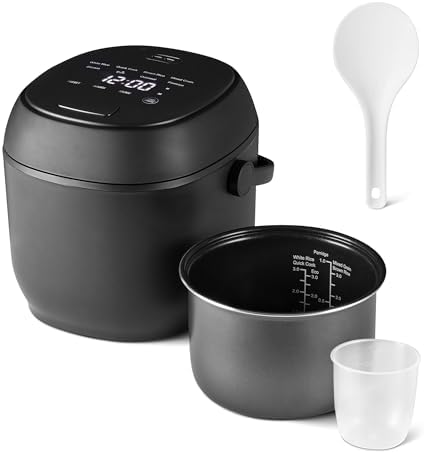
- 8 COOKING FUNCTIONS: Menu modes include White Rice, Quick Cook, Brown Rice, Mixed Grain, Steam, Eco, Oatmeal, and Porrid…
- FUZZY LOGIC TECHNOLOGY: Advanced microcomputer adjusts cooking time and temperature automatically for perfectly cooked r…
- NON-STICK CERAMIC COATING: Aluminum inner pot with non-stick ceramic coating cleans easily by hand with mild soap
- Buy a dedicated rice cooker if rice is a weekly (or daily) staple, you care about consistent texture, and you want a push-button appliance that also keeps rice warm for the meal.
- Buy an Instant Pot if rice is only one of many things you cook and you also want to pressure-cook beans, soups, stews, and tougher cuts of meat in one machine.
- Own both only if you cook rice often and regularly pressure-cook other dishes, especially if you need both finished at the same time.
- Already own one? You probably don’t need the other. See Do You Need Both below.
Rice Cooker vs Instant Pot: At-a-Glance Comparison
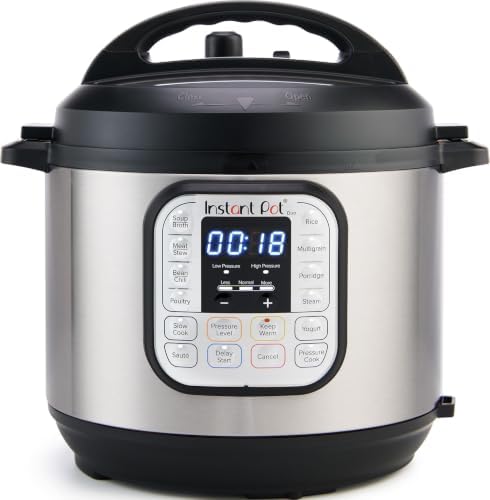
- 7 Cooking Functions: Pressure cook, slow cook, sauté, steam, make rice, yogurt, or simply keep your meal warm—all in one…
- Customizable Smart Programs: Tackle every recipe with 13 one-touch options, from hearty soups to decadent cakes
- Safe & Easy Steam Release: The Easy-Release steam switch ensures fast, safe, and simple steam release every time
Features and results vary by model, so read this as a guide to the general category, not a spec sheet.
| Factor | Dedicated Rice Cooker | Instant Pot–Style Multicooker |
|---|---|---|
| Primary purpose | Rice and grains | Pressure cooking plus many other functions |
| Rice cooking performance | Purpose-built; quality varies by model tier | Capable; results depend on model, recipe, and release method |
| Texture and consistency | Often more hands-off and repeatable, especially in micom/fuzzy-logic models | Good results are achievable; more depends on your water ratio and release method |
| White rice | Core strength | Works well with a tested ratio and timing |
| Brown rice | Depends on model; better models have a dedicated program | Works with longer pressure time; follow a tested recipe |
| Jasmine | Usually handled well, but program names vary | Works; avoid overcooking delicate grains |
| Basmati | Works well on most white-rice programs | Works; timing matters |
| Sushi/sticky rice | Many models have a sushi or short-grain setting | Works with the right water ratio |
| Mixed grains | Often a dedicated setting | Manual settings; follow a recipe |
| Porridge/congee | Common program on mid-to-high-end models | Some models have a porridge program; others need manual settings |
| Cooking method | Heat from below (or induction), steam vent, sensors switch to warm | Sealed pot under pressure |
| Pressure cooking | No (except specialty pressure rice cookers) | Yes, the main feature |
| Cooking speed | Slower start-to-finish cycle on many models | Short pressure time, but see total-time section |
| Total cooking time | One cycle, varies widely by model | Pressurizing + cooking + pressure release |
| Pressurization/preheating | None for standard models | Required, and it varies with amount and starting temperature |
| Pressure release time | None | Natural or quick release, depending on the recipe |
| Keep-warm | A core feature, often with extended settings | Typically available; duration and performance vary by model |
| Versatility | Rice, grains, often steaming, sometimes soups or slow cooking | Very broad |
| Meal prep | Great for batch rice | Great for batch rice and proteins, beans, soups |
| Steaming | Common, with a steam tray on many models | Yes, with a rack |
| Slow cooking | Only on multifunction models | Common on many models |
| Sautéing | Rare | Common |
| Soup/stew | Limited | Strong |
| Ease of use | Often very simple | Easy once learned |
| Learning curve | Low | Moderate (release methods, sealing, liquid rules) |
| Cleaning | Inner pot and lid, plus vent parts | Inner pot, lid, sealing ring, valve parts |
| Capacity | Measured in rice cooker “cups” | Measured in quarts of pot volume |
| Countertop footprint | Compact to medium | Medium to large |
| Storage | Easier to store | Bulkier, and the lid is awkward |
| Noise/steam | Gentle steam from the vent | Brief steam during venting |
| Safety | No pressure to manage | Pressure-related steps to follow |
| Price/value | Wide range, from basic to premium | Wide range, from basic to feature-rich |
| Long-term usefulness | Great if you eat rice often | Great if you cook varied meals |
| Best household | Rice-forward cooks | Do-it-all cooks |
What Is a Rice Cooker?
A rice cooker is a countertop appliance that automates cooking rice. You add rice and water to the inner pot, press a button, and it handles the rest.
America’s Test Kitchen explains that most electric rice cookers heat from a plate beneath the bowl, and some use induction heating. In both cases, steam escapes through a vent. A sensor notices when the temperature climbs above 212°F, which signals that the water is gone, and the machine then switches to keep-warm. You can read their full methodology and results in America’s Test Kitchen’s rice cooker testing.
Rice cookers range from one-switch models to computerized machines with menus for white, brown, sushi, porridge, and more. Many also include a steam tray, and some add slow-cook or other functions.
What Is an Instant Pot?
- 7 Cooking Functions: Pressure cook, slow cook, sauté, steam, make rice, yogurt, or simply keep your meal warm—all in one…
- Customizable Smart Programs: Tackle every recipe with 13 one-touch options, from hearty soups to decadent cakes
- Safe & Easy Steam Release: The Easy-Release steam switch ensures fast, safe, and simple steam release every time
“Instant Pot” is the best-known brand of electric pressure cooker, and the name is often used for the whole category of multicookers. It seals the lid, builds pressure, and cooks food under pressure, so many dishes finish faster than on the stove or in a slow cooker.
Depending on the model, an Instant Pot-style multicooker may pressure-cook, slow-cook, sauté, steam, keep food warm, and cook rice. Programs, accessories, and extras like air-fry lids vary by model, so check the specifications of the exact one you’re considering.
How a Rice Cooker Cooks Rice
A basic rice cooker works on a simple principle. It heats the water until the rice has absorbed it, and when the temperature passes boiling, it switches to warm.
Higher-tier models add computer control. They can adjust heat and timing through the cycle instead of running one fixed pattern. That’s the difference between a basic cooker and a micom or fuzzy-logic one, which we cover in the rice quality section.
How an Instant Pot Cooks Rice
An Instant Pot cooks rice in a sealed pot under pressure. Because steam can’t escape once the pot is sealed, rice generally needs less water than in an open pot.
America’s Test Kitchen’s pressure-cooker method uses a rice-to-water ratio of about 1:1 plus a small extra amount of water. Their recipe cooks at high pressure for 3 minutes, then lets pressure release naturally for 10 minutes. They report that the method cuts cooking time by almost half compared with a conventional covered pot. See their pressure-cooker rice method for details.
Many Instant Pot models have a “Rice” button, while others rely on a manual pressure setting. Follow your own model’s manual or a tested recipe for your rice variety.
Rice Cooker vs Instant Pot: Rice Quality
This is where the dedicated rice cooker earns its reputation. It’s also where people overgeneralize in both directions.
Why Rice Cookers Can Have an Edge
A rice cooker has one job, so its design is tuned to it:
- Temperature control and moisture management. The sensor-and-vent design lets steam escape and finishes when the water is gone, which keeps results fairly predictable.
- Cooking stages. Some models include a soak or low-temperature start and a steaming finish. America’s Test Kitchen noted that their tests didn’t produce definitive data confirming those stages exist in every machine. They did find that cookers with lower starting temperatures and longer cooking periods produced the best rice.
- Rice-specific programs. White, brown, sushi, mixed, porridge, and quick settings let the machine change its pattern for the grain.
- Keep-warm performance. Good rice cookers hold rice warm for hours. In America’s Test Kitchen’s testing, the top models kept rice at a food-safe temperature for 12 hours.
- Batch-to-batch consistency. Because the process is automated, you tend to get repeatable results once you’ve found the right water level.
Not All Rice Cookers Are the Same
Here’s how the main tiers differ:
| Type | What it means | What to expect |
|---|---|---|
| Basic (conventional) | Heating element plus a thermal sensor, often with just a switch | Simple and usually the most affordable; less control and fewer settings |
| Digital/Micom | A microcomputer controls the cooking cycle | More programs, timers, and menus |
| Fuzzy-logic | Micom control that adjusts time and temperature as the rice cooks | More adaptive; common in mid-to-premium models |
| Induction-heating (IH) | The pot itself is the heat source via electromagnetic induction | Usually premium; see the caveat below |
Zojirushi, a major rice cooker brand, explains in its guide to micom, fuzzy logic, and Neuro Fuzzy that “Neuro Fuzzy” is its own trademarked name for its most advanced microcomputerized technology. It also notes that standard micom models use a conventional heating element, while IH models use induction heating.
Two caveats matter here:
- America’s Test Kitchen said fuzzy-logic models weren’t automatically excellent, but the rice cookers that made excellent rice in their test had fuzzy logic.
- They also reported that induction cookers in their lineup didn’t consistently perform better or faster, and they cost more.
Some rice cookers also needed water-ratio adjustments, especially for short-grain white and brown rice. And program names aren’t always intuitive: on some models they tested, long-grain white rice came out best on the “mixed rice” setting. Even a good rice cooker can reward a little experimenting.
Not Every Instant Pot Makes the Same Rice
The Instant Pot is capable of excellent rice, but it’s less automatic. Results depend on:
- Your model’s rice program (or manual settings)
- The rice variety and your water ratio
- How much rice you cook (very small batches can be trickier in a large pot)
- Whether you use natural or quick release
Don’t assume every Instant Pot produces identical results, or that a high price guarantees better rice. Check your manual and follow tested recipes.
Rice Cooker vs Instant Pot: Cooking Speed
Most speed claims compare the wrong numbers. Fixing that is the most useful thing in this section.
Total Cooking Time vs Programmed Time
An Instant Pot recipe might say “3 minutes at high pressure.” That number is only the pressure-cooking stage. A realistic Instant Pot timeline includes:
- Heating and pressurizing. The pot has to reach pressure before the countdown starts. This varies with the amount of food and its starting temperature, and larger batches generally take longer.
- Pressure cooking. The number printed in the recipe.
- Pressure release. Many rice recipes call for natural release (the pot depressurizes on its own), sometimes followed by quick release. America’s Test Kitchen’s rice method includes 10 minutes of natural release after the cook time.
A rice cooker has a single automated cycle with no pressurizing or release stage, but its length varies a lot by model, rice type, quantity, and whether it uses soaking or steaming stages. In America’s Test Kitchen’s testing, the fastest rice cookers made large batches of long-grain white rice in about 30 minutes, while the slowest took about 65 minutes. Their cooks also found that quicker, hotter cycles didn’t produce better rice, especially with brown rice.
So don’t compare “3 minutes” to “40 minutes.” Compare the full time from pressing start to eating:
- Instant Pot: pressurizing + pressure cooking + release
- Rice cooker: one full cycle (and then it keeps rice warm until you’re ready)
What About Pressure Rice Cookers?
Some specialty rice cookers use pressure. America’s Test Kitchen tested one that made a full batch in about 35 minutes. It also found the machine scorched the bottom of some batches, and the lid and gasket were harder to clean. This category blurs the line between the two appliances, so check reviews for the specific model before buying.
Rice Cooker vs Instant Pot: Versatility
This is the Instant Pot’s strongest category. A typical Instant Pot-style multicooker can handle:
- Beans and legumes
- Soups and stews
- Tough cuts of meat
- One-pot meals
- Steamed vegetables and eggs
- Sautéing, so you can brown ingredients in the same pot
- Slow cooking (on models that include it)
A rice cooker is more specialized, though not as narrow as its name suggests. Many models steam vegetables or fish above the rice and make oatmeal, grains, or porridge. Multifunction rice cookers may add slow-cook or soup settings. Even so, a rice cooker won’t replace pressure-cooking a pot roast or a pot of dried beans.
Features differ widely between Instant Pot models, so confirm the programs and accessories on the specific model rather than assuming.
Rice Cooker vs Instant Pot: Ease of Use
Rice cooker. Many models are close to foolproof: rinse, add water to the line, press start. More advanced ones add menus, but the core experience stays simple. The learning curve is mainly finding your preferred water level.
Instant Pot. It’s easy once you’ve learned a few concepts: sealing the lid, setting the valve, choosing natural or quick release, and respecting liquid requirements. It’s not hard, but there’s more to learn, and it’s less forgiving if you skip steps.
For a true beginner who only wants rice, the rice cooker is the gentler start. For someone who wants to learn a range of recipes, the Instant Pot’s learning curve pays off.
Rice Cooker vs Instant Pot: Capacity
The numbers on the box mean different things, so don’t compare “cups” to “quarts” directly.
- Rice cooker “cups” usually refer to the small measuring cup that comes with the machine, not a standard US cup. In America’s Test Kitchen’s lineup, the included scoops held roughly ¾ cup.
- Uncooked vs cooked. A “5.5-cup” rice cooker usually means 5.5 cups of uncooked rice, which makes more cooked rice (America’s Test Kitchen lists that model at roughly 2 to 11 cups cooked). Some brands label by cooked cups instead, so always check which one the label means.
- Instant Pot quarts measure the total volume of the inner pot, not how much rice you can cook. Pressure cooker manuals set maximum fill levels and often a lower limit for foods that expand, such as rice and beans. Check your manual.
Size by household and habits:
- Batch cooking and meal prep: Think in cooked cups. If you regularly cook enough rice for several meals, a larger rice cooker makes that simple.
- Small households: Very large pots can handle small amounts less gracefully, and a compact rice cooker or a smaller multicooker can be a better fit.
- Big families: Remember that a large Instant Pot has to share its capacity between rice and everything else you cook at once.
For help sizing a cooker, see our guide to the best rice cookers for families.
Rice Cooker vs Instant Pot: Cleaning and Maintenance
Exact requirements depend on the model, so check your manual (including whether parts are dishwasher-safe).
| Part | Rice Cooker | Instant Pot |
|---|---|---|
| Inner pot | Usually nonstick-coated or similar; wash by hand or follow the manual | Typically stainless steel; many are dishwasher-safe, per the manual |
| Lid | Often a removable inner lid; starch collects underneath | Large lid with a valve and parts to remove |
| Steam components | Steam vent cap or tray on many models | Steam release valve and anti-block parts |
| Silicone sealing ring | Not applicable on standard models | Needs regular cleaning and eventual replacement |
| Condensation | A condensation collector on many models | Less of a concern, but wipe the lid area |
| Food residue | Starchy residue near the vent and inner lid | Residue can collect around the ring and valve |
| Long-term maintenance | Keep the lid and vent clean | Inspect and replace the ring; keep the valve clear |
America’s Test Kitchen noted that cookers with removable inner lids were easier to clean, and that starchy water escaping from the vent made some machines messier than others.
On the Instant Pot side, the silicone sealing ring is porous and can absorb odors and discolor over time. Instant Pot’s own guidance recommends replacing it roughly every 12 to 18 months, or every 6 to 12 months if you want to avoid odors, and using genuine rings. You can read this in the company’s sealing ring product information.
Rice Cooker vs Instant Pot: Counter Space
Rice cookers range from compact (small 3-cup models) to fairly large (big family sizes). A mid-size rice cooker is typically easier to tuck into a cabinet.
Instant Pot-style multicookers are usually bulkier, especially larger sizes and models with extra lids. They’re tall, and the lid can be awkward to store.
In a small apartment kitchen, one multicooker might replace several appliances. But if you’d mostly use it for rice, a compact rice cooker may be the better use of space. Measure your cabinet and counter before you buy either one.
Rice Cooker vs Instant Pot: Safety
Rice cooker. A conventional electric rice cooker doesn’t build pressure, so there’s no pressure-release step. The practical points are the usual ones for hot appliances: hot steam from the vent, a hot inner pot, and keeping cords and surfaces clear.
Instant Pot (pressure multicooker). Pressure cooking is safe when you follow the instructions. Instant Brands lists multiple built-in safety mechanisms, though features vary by model. Good habits include:
- Seal the lid correctly and check that the sealing ring is seated.
- Set the valve to the right position for the recipe (sealing for cooking, venting to release).
- Follow the recipe’s pressure-release instructions. Many rice recipes use natural release because starchy foods can sputter or foam during quick release.
- Keep hands and face away from the steam release valve.
- Maintain the sealing ring and use only parts the manufacturer approves.
- Read your model’s manual, since controls and procedures differ.
Keeping Rice Safe After Cooking
Rice sitting in a warming appliance still needs attention. USDA guidance says leftovers should be refrigerated within 2 hours of cooking or of being taken out of an appliance that keeps them warm. USDA also recommends dividing food into shallow containers so it cools quickly, and says leftovers keep for 3 to 4 days in the refrigerator. See the USDA’s leftovers and food safety guide.
Keep-warm settings are meant for serving, not for storing rice for days. Follow your manual’s guidance on how long a model can safely hold rice.
Rice Cooker vs Instant Pot: Cost and Value
Prices change often, so check current prices before you buy. It’s more useful to think in tiers:
- Entry-level rice cookers: Simple, with few features. Good for occasional use, but results can vary, and America’s Test Kitchen found several budget models needed water-ratio tinkering or ran too hot.
- Premium rice cookers: Micom, fuzzy-logic, or induction models cost more. They add settings, timers, and stronger keep-warm performance. In America’s Test Kitchen’s tests, the top models were fuzzy-logic cookers, while induction models weren’t automatically better.
- Basic Instant Pot models: Cover the core functions most people use (pressure cook, slow cook, sauté, steam).
- Advanced multicookers: Add extra programs or lids such as air-frying, which only matters if you’ll use them.
Value depends on how you cook:
| Question | If yes, it tilts toward |
|---|---|
| Do you eat rice several times a week? | A dedicated rice cooker |
| Do you cook beans, stews, or tough meats regularly? | An Instant Pot |
| Do you want to replace multiple appliances? | An Instant Pot |
| Is counter space tight? | Whichever you’d use most often |
| Do you want the simplest possible rice? | A rice cooker |
| Do you rarely cook rice? | An Instant Pot (or neither) |
A $100 appliance you use five times a week beats a $50 one that sits in a cabinet.
Which Is Better for Different Types of Rice?
Both appliances can cook all common types, but each has trade-offs.
- White rice: Both work well. A rice cooker makes it effortless. An Instant Pot makes it with a tested ratio and release method.
- Brown rice: It needs more time and water. America’s Test Kitchen found that hot, fast cookers did poorly with brown rice, and their testers often had to adjust the water. An Instant Pot handles brown rice well with a longer pressure time, but you’ll want a tested recipe.
- Jasmine: Delicate and fragrant. A rice cooker with a gentle cycle is a natural fit. In the Instant Pot, avoid overcooking.
- Basmati: Long, separate grains. Both work. The key is rinsing, using the right water, and not overcooking.
- Sushi/sticky rice: Many rice cookers have a short-grain or sushi setting. America’s Test Kitchen found that several rice cookers made short-grain rice wetter than they liked at the manufacturer’s ratio, so expect to tweak. An Instant Pot can make short-grain rice with a 1:1-style ratio.
- Mixed grains: Many rice cookers have a mixed-grain program. In an Instant Pot you’ll use manual settings.
- Porridge/congee: Many rice cookers have a porridge setting. Some Instant Pot models do too.
Which Is Better for Families?
Families tend to cook larger batches, serve at staggered times, and juggle multiple dishes.
A rice cooker is great when rice is the daily base. It cooks hands-off, and a good keep-warm function covers late dinners. The cooker also frees your stove and pressure cooker for the main dish.
An Instant Pot is great when you want to make the whole meal in one pot. It’s a good fit if rice is only one side among many.
For larger households, capacity matters more than features. Compare cooked-cup capacity, not just the label. Our guide to the best rice cookers for families walks through sizes and trade-offs.
Which Is Better for Meal Prep?
Both are strong, in different ways.
- Rice cooker for meal prep: It makes large batches of rice with little attention, and you can portion and cool them promptly. Use shallow containers and refrigerate within the USDA’s 2-hour window.
- Instant Pot for meal prep: It handles proteins, beans, soups, and grains in the same pot, so one appliance can cover most of a prep session.
If your meal prep is rice-heavy, a rice cooker saves effort. If it’s protein- and bean-heavy, the Instant Pot does more of the work. If you do both, you may want both. More on that below.
Who Should Buy a Rice Cooker?
A dedicated rice cooker makes more sense if you:
- Eat rice frequently
- Care about consistent texture
- Cook different rice varieties
- Want simple operation with little setup
- Want strong keep-warm functionality
- Prefer a specialized appliance
- Use rice as a staple side or meal base
If this sounds like you, compare a few models. Our Aroma digital rice cooker review and Zojirushi vs Aroma comparison show how a budget-friendly model stacks up against a premium one.
Who Should Buy an Instant Pot?
An Instant Pot makes more sense if you:
- Want one multifunction appliance
- Cook soups and stews
- Pressure-cook meat and beans
- Steam or sauté regularly
- Meal prep
- Have limited storage and would rather own one device than several
- Don’t eat rice often enough to justify a dedicated machine
If you’re still weighing multicookers generally, our multicooker and electric pressure cooker buying guide covers how to compare models.
Do You Need Both a Rice Cooker and an Instant Pot?
Usually not. But there are real situations where owning both makes sense.
Owning both can make sense when:
- You want rice cooking separately while a stew or beans pressure-cook, with both ready at the same time
- You eat rice often and also pressure-cook regularly
- You cook for a family and prepare multiple components at once
- You meal prep and want to run two batches in parallel
- You want specialized rice performance and a general-purpose pot
Owning both is unnecessary when:
- You already own one that does what you need
- You eat rice only occasionally and are happy with how it turns out in your multicooker
- You already own a rice cooker and only occasionally want a pressure-cooked dish
- Counter or cabinet space is limited
Don’t buy two appliances just because a comparison article makes it sound tidy. If your current one is doing the job, the extra purchase probably isn’t needed.
Real-World Scenarios
- You eat rice almost every day. Go with a rice cooker. The daily convenience, the keep-warm function, and consistent results justify a dedicated machine.
- A family that cooks large meals. Consider a larger rice cooker, or an Instant Pot if you pressure-cook mains. Capacity matters more than extras. If you cook both rice and a pressure-cooked main every night, owning both frees up a lot of juggling.
- A small apartment kitchen. A single Instant Pot can replace several appliances. But if you mostly want rice, a compact rice cooker takes less space.
- A beginner cook. A rice cooker is the gentler start for rice. An Instant Pot opens up more dishes but has more to learn.
- Someone who mostly cooks soups and stews. Instant Pot. A rice cooker doesn’t pressure-cook, so it can’t match that.
- A meal-prep household. If your prep is mostly proteins and beans, an Instant Pot. If it’s mostly rice and grains, a rice cooker. If it’s both, you might use both.
- Someone who cooks jasmine or basmati often. Either can work, but a rice cooker takes the guesswork out of delicate grains.
- Someone who primarily wants rice. Rice cooker. That’s what it’s built for.
- Someone who wants one appliance instead of several. Instant Pot, with realistic expectations about rice.
- Someone who already owns an Instant Pot. Try tested rice recipes first. Buy a rice cooker only if you eat rice often and aren’t happy with the results.
- Someone who already owns a rice cooker. You don’t need an Instant Pot for rice. Buy one only if you want pressure cooking for other dishes.
- Deciding whether to buy the second appliance. Ask whether the first one frustrates you in a specific way. If it doesn’t, keep the second purchase off the list.
Common Questions
Is an Instant Pot as good as a rice cooker?
For rice, it can be, but it depends on the models and your recipe. A rice cooker generally makes rice more hands-off. An Instant Pot can make very good rice with the right ratio and release method, plus it does much more.
Can an Instant Pot replace a rice cooker?
For many people, yes, especially if you eat rice occasionally. If rice is a daily staple and you care about texture and keep-warm performance, a dedicated rice cooker may be worth it.
Is rice better in a rice cooker or Instant Pot?
Neither wins for every model. Rice cookers tend to offer more repeatable results with less effort, while a good Instant Pot recipe can match them for many people.
Is an Instant Pot faster than a rice cooker?
Not always. The Instant Pot’s cooking stage is short, but you have to add pressurizing and release time. A rice cooker runs one cycle, and its length varies by model (America’s Test Kitchen saw roughly 30 to 65 minutes for large batches). Compare total time, not the cooking number.
Can I cook all types of rice in an Instant Pot?
Generally yes, but timing and water ratios differ for white, brown, jasmine, basmati, and sticky rice. Follow a tested recipe for your variety and check your model’s manual.
Do rice cookers use less electricity?
There’s no simple answer. Wattage varies by model, and long keep-warm periods use power too. Compare the wattage listed for the specific models you’re considering.
Do I need a rice cooker if I already have an Instant Pot?
Not necessarily. If you’re happy with your Instant Pot rice and cook it occasionally, probably not. If you eat rice often and want more consistency and a dependable keep-warm function, it may be worth adding one.
Can you cook more than rice in a rice cooker?
Yes. Many models steam vegetables or fish, cook grains, and make porridge or congee. Some multifunction rice cookers also have slow-cook settings. They don’t pressure-cook, though.
Is a rice cooker easier to clean than an Instant Pot?
Often, because there’s no sealing ring or pressure valve to maintain on a standard rice cooker. But starchy residue near the vent and lid can be messy on some models, so cleaning varies.
Is it worth owning both?
It can be, if you cook rice often and also pressure-cook regularly, especially when you need both ready at once. If you only use one of them most of the time, it’s usually not worth it.
Final Buying Guide
Use this quick checklist to decide:
- How often do you eat rice? Several times a week points to a rice cooker. Occasionally points to an Instant Pot.
- What else do you cook? Beans, stews, and tough meats favor an Instant Pot.
- How picky are you about rice texture? If it matters a lot, lean toward a rice cooker, ideally a micom or fuzzy-logic model.
- How much space do you have? Measure, and don’t forget storage.
- Who are you cooking for? Check cooked-cup capacity for rice cookers and pot size plus fill limits for multicookers.
- What’s your comfort level? Rice cookers are simpler. Multicookers take a little learning.
- Do you already own one? Try tested recipes in what you have before buying another.
Before you purchase, verify the specifications of the exact model, since features, programs, and capacities vary, and check current pricing.
Conclusion
The choice between a rice cooker and an Instant Pot comes down to focus. A rice cooker does one job, and does it with minimal effort. An Instant Pot does many jobs, including rice, and asks you to learn a bit more.
If rice is central to how you eat, a rice cooker is a good fit. If you want one pot for beans, stews, and everything in between, with rice on the side, an Instant Pot makes more sense. And if you already have one that serves you well, the best purchase may be no purchase at all.
SEO Title: Rice Cooker vs Instant Pot: Which Should You Buy?
Meta Description: Rice cooker vs Instant Pot: compare rice quality, total cooking time, cleaning, safety, versatility and value to choose the right one—or see if you need both. (about 159 characters)
URL Slug: rice-cooker-vs-instant-pot
Primary Keyword: Rice Cooker vs Instant Pot
Secondary Keywords: Instant Pot vs rice cooker, rice cooker or Instant Pot, rice cooker vs pressure cooker, rice cooker vs multicooker, Instant Pot rice, Instant Pot for rice, dedicated rice cooker, best appliance for rice, rice cooker for families, rice cooker for meal prep, do you need a rice cooker if you have an Instant Pot
Before publishing
- External links (exactly 5, all checked): America’s Test Kitchen rice cooker testing; America’s Test Kitchen pressure-cooker rice method; Zojirushi’s micom/fuzzy-logic guide; Instant Pot’s official sealing-ring page; the USDA FSIS leftovers guide.
- Internal links: I included 5 placeholders: best rice cookers for families (used twice), Aroma digital rice cooker review, Zojirushi vs Aroma, and the multicooker buying guide. Replace each placeholder with its live URL, or delete the link if the page isn’t published.
- SERP research: My searches turned up few results on the exact queries, so I used them mainly to understand what competitors cover. Their emphasis was on speed and versatility, and the article’s focus on total cooking time and capacity labeling is meant to fill the gaps.
- No hands-on testing is claimed. Test findings are attributed to America’s Test Kitchen, and I left out all prices and ratings.