SEO Title: Best Rice Cookers for Families in 2026: Sizes, Picks & Buying Guide
Meta Description: Find the best rice cookers for families in 2026 — the right capacity, features, and picks for everyday meals, big batches, and meal prep.
URL Slug: best-rice-cookers-for-families-2026
If you’re shopping for a rice cooker as a family, the “best rice cooker” lists you’ll find online mostly aren’t written with you in mind. They’re built around what’s popular, not around how much rice your household actually eats in a week. A rice cooker that’s perfect for a couple in a studio apartment can leave a family of five without enough for dinner, and a 10-cup commercial-style machine can be complete overkill — and a countertop hog — for a family of three who eats rice twice a week.
This guide is built specifically around family-size decisions: how much rice your household really needs, what “capacity” actually means on the box, and which features are worth paying for versus which ones just add cost.
Quick Answer: What Size Rice Cooker Does a Family Need?
For most households, the sizing shakes out like this:
- Families of 2–3: A 3-cup to 5.5-cup (uncooked) cooker is usually enough.
- Families of 4: A 5.5-cup cooker is the sweet spot for most nights, with a 6–8 cup model as a comfortable upgrade if you want leftovers.
- Families of 5–6: Look at 6-cup to 10-cup models, especially if rice is a main dish rather than a side.
- Families of 6+ or meal-preppers: A 10-cup (uncooked) cooker gives real headroom for big dinners, guests, and batch cooking.
The catch is that “cups” on rice cooker packaging don’t mean what most people assume, which is the single biggest reason families end up with the wrong size. More on that below.
Best Rice Cookers for Families at a Glance
| Rice Cooker | Uncooked Capacity | Approx. Family Size | Cooking Technology | Best For | Key Feature | Main Limitation |
|---|---|---|---|---|---|---|
| Zojirushi NS-TSC10 | 5.5 cups | 3–5 people | Micom (fuzzy logic) | Everyday family reliability | Steam basket + cake setting | Hand-wash pot only |
| Cuckoo CR-1020F | 10 cups | 6–8+ / meal prep | Fuzzy Logic | Large families, entertaining | 16 menu options + turbo mode | Large countertop footprint |
| Hamilton Beach 37518 | 4 cups (8 cups cooked) | 2–4 people | Digital presets | Budget-conscious families | Dishwasher-safe, PFAS-free pot | Modest capacity |
| Aroma ARC-150SB | 10 cups | 6–8+ / entertaining | Sensor Logic | Big batches on a budget | Slow cook + steam + 15-hr timer | Less precise texture control |
| Tiger JBV-A10U | 5.5 cups | 3–5 people | Micom + Tacook | One-pot family meals | Synchro-cooking steam plate | Mid-size capacity |
| Zojirushi NP-HCC10XH | 5.5 cups | 3–5 people | Induction Heating (IH) | Brown rice & fine texture control | GABA brown rice setting | Premium price for mid capacity |
Our Top Family Rice Cooker Picks
1. Zojirushi NS-TSC10 — Best Overall Family Rice Cooker

- 5-1/2-cup computerized rice cooker and warmer with advanced Neuro Fuzzy logic technology. Wall mountable
- Multi-menu selections; automatic keep-warm, extended keep-warm, and reheat cycles. Electrical Rating – 120 volts / 680 w…
- Spherical, nonstick inner pan allows for uniform heating; LCD clock and timer; retractable cord
Best for: Families of 3–5 who cook rice several times a week and want consistent results without babysitting the pot.
The NS-TSC10 uses Zojirushi’s Micom (microcomputer) fuzzy logic system, which automatically adjusts cooking temperature and time and can also work as a steamer, with a cake menu setting included alongside the rice functions. The 5.5-cup uncooked capacity holds 5.5 cups uncooked in a 1.0-liter pot and draws 610 watts, which puts its cooked yield in the 10–11 cup range — comfortable for a family of four with some leftovers. zojirushizojirushi
Pros
- Fuzzy logic adjusts automatically for white, brown, sushi, porridge, and other rice types
- Steam basket included for simple one-pot vegetable or protein steaming
- Detachable inner lid simplifies cleaning
- Long track record and strong customer reviews in this size class
Cons
- 5.5-cup capacity gets tight for families of 6+ eating rice as a main dish
- Inner pot and lid are hand-wash only, not dishwasher-safe
- Costs noticeably more than basic thermostat cookers of similar size
2. Cuckoo CR-1020F — Best Large-Capacity Family Rice Cooker

- MULTIFUNCTIONAL: Whether you’re in the mood for a hearty jambalaya, steamed veggies and rice, or even a fluffy cake (yes…
- FOOD STEAMER: The built-in Steam function allows for nutrient-rich meals to be prepared above while rice, soup, or any o…
- FAMILY SIZE: The ARC-5000SB has a 20-cup cooked capacity yielding anywhere from 4 to 20 cups of cooked rice and measures…
Best for: Families of 6 or more, households that batch-cook rice for the week, or anyone who regularly hosts.
This is a genuinely large-format machine: it’s a 10-cup uncooked Micom rice cooker with a multi-cook function for soups, stews, and seared meats, along with reheat, keep-warm, and preset-timer modes. It also packs in more presets than most competitors — 16 menu options covering white rice, GABA/brown rice, yogurt, scorched rice, slow cook, steam cook, soup, and porridge, plus a turbo mode that finishes white rice in about 30 minutes and an auto-clean steaming cycle. That’s a 20-cup cooked yield, enough for a big family dinner plus next-day lunches. cuckooamericacuckooamerica
Pros
- 10-cup uncooked / 20-cup cooked capacity fits large households and gatherings
- Fuzzy Logic technology adjusts for grain type automatically
- Turbo mode meaningfully cuts cook time for weeknights
- Auto-clean cycle helps with a machine this size
Cons
- Large footprint (roughly 17.5″ tall) needs real counter or storage space
- Less established U.S. parts and service network than Zojirushi or Tiger
- Overkill for a family of 2–3 who rarely cooks big batches
3. Hamilton Beach 37518 — Best Budget Family Rice Cooker

- PERFECT FOR MEALS ANY TIME OF DAY: Whether it’s breakfast, lunch or dinner, you can cook rice, hot cereal and whole grai…
- FAMILY-SIZE CAPACITY: The removable pot of the rice cooker holds up to 2 quarts or 8 cups of cooked rice—enough to feed …
- EASY-OPENING HINGED LID: The hinged lid on the multi-function cooker makes it easy to open, fill and serve and seals to …
Best for: Families of 2–4 who want an easy-clean, no-fuss cooker without paying premium prices.
The Hamilton Beach line stands out among budget cookers for one reason in particular: it’s actually dishwasher-safe. The removable nonstick pot fits up to eight cups of cooked rice for family-sized meals, has one-touch preprogrammed cooking with a countdown timer, and includes a 2-in-1 steam and rinse basket that doubles as a colander — with both the pot and basket dishwasher safe for simple cleanup. It also clarifies its own measuring cup, which is worth noting: one rice measuring cup equals about 6 oz. (177 g), or roughly 3/4 cup U.S. dry measure, based on the traditional Japanese gō measurement — a detail that matters a lot for the capacity confusion covered later in this guide. slickdealsslickdeals
Pros
- Budget-friendly price point relative to Micom/fuzzy-logic machines
- Ceramic, PFAS-free nonstick pot
- Dishwasher-safe pot and steam basket — genuinely easier cleanup than most competitors
- One-touch presets for white rice, whole grains, and hot cereal
Cons
- 8-cup cooked (4-cup uncooked) capacity is modest for families of 5+
- No fuzzy logic or Micom — less fine-tuned texture control
- Fewer specialty presets than premium models
4. Aroma ARC-150SB — Best Budget Large-Capacity Rice Cooker
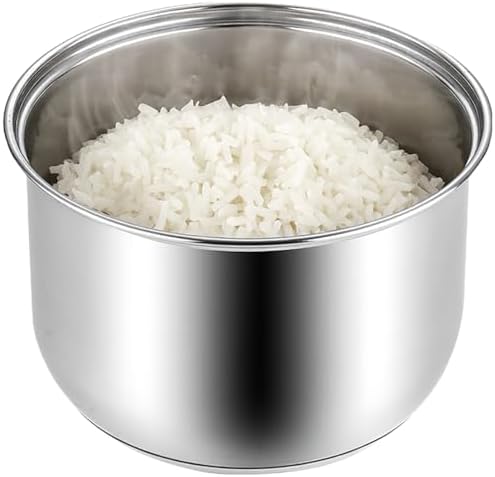
- Perfect Fit Replacement – Compatible with Multiple Models: Compatible with Aroma ARC-150SB, Aroma ARC-5200SB, Also Compa…
- Premium Stainless Steel for Durability – Crafted from high-quality 304 stainless steel, this rice cooker replacement pot…
- Efficient & Even Heating – Designed with high thermal conductivity, this rice cooker inner pot replacement distributes h…
Best for: Larger families or households that entertain often but don’t want to spend Zojirushi- or Cuckoo-level money.
The ARC-150SB gets you into 10-cup/20-cup territory at a fraction of the price of premium large-capacity machines. It’s a stainless steel 3-in-1 digital rice cooker, slow cooker, and food steamer with Sensor Logic Technology, a 15-hour programmable delay timer, and multiple preset cooking functions, and it includes a stackable steaming basket for cooking meat or vegetables at the same time as the rice below. desertcartwalmart
Pros
- 10-cup uncooked / 20-cup cooked capacity at a budget price
- Doubles as a slow cooker and steamer, useful for one-pot family meals
- 15-hour delay timer for meal planning
- Strong long-term customer review volume and ratings
Cons
- Sensor Logic is simpler than true fuzzy logic/Micom, so texture consistency isn’t as fine-tuned
- Bulky shape takes up meaningful counter space
- Hand-wash care recommended for the pot per the manufacturer’s product listing
5. Tiger JBV-A10U / JAX-T10U-K — Best for Cooking Rice Plus a Main Dish
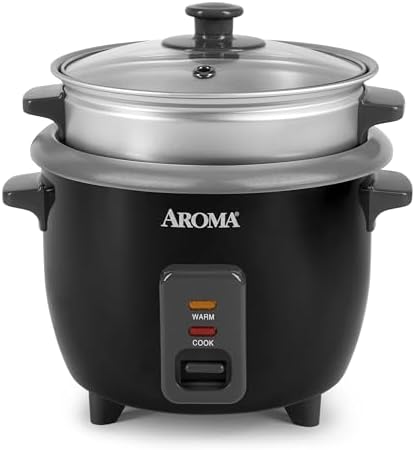
- Multi-Functional Use – Whether you’re in the mood for a hearty jambalaya, steamed veggies and rice, or a belly-warming s…
- One-Touch Operation – This cooker is a proud member of our “set it and forget it” mentality. The one-touch operation is …
- Simultaneous Steaming – With the included steam tray, steam foods above while rice, soup, or any other meal simultaneous…
Best for: Families who want to cook a protein or side dish at the same time as the rice, night after night.
Tiger’s standout feature here is “tacook” synchro-cooking: a specially designed cooking plate lets you prepare a second dish while the rice cooks below, without the flavors from the plate affecting the rice, on top of Micom-controlled cooking and a slow cook function for stews and soups. One tester’s description of the tacook plate in practice: steam rising from the cooking rice finishes the dish placed on the tray above it — effectively a built-in steamer that shares the same cook cycle as your rice. Microcomputer Controlled Rice Cooker JAX-T10U/18U +2
Pros
- Tacook plate genuinely simplifies weeknight one-pot family meals
- Micom controlled with multiple auto-adjusting presets
- 12-hour keep-warm function
- Made in Japan build quality
Cons
- 5.5-cup uncooked capacity is mid-size, same ceiling as the Zojirushi Micom pick
- Using the tacook plate reduces the rice batch space slightly
- Hand-wash care recommended for the inner pot
6. Zojirushi NP-HCC10XH — Best Premium Pick for Brown Rice and Texture Control

- Induction rice cooker and warmer. Electrical Rating : 1,230 Watts
- Multi-Menu cooking functions. Dimension: 10 inch W x 14 inch D x 8 inch H. Capacity: Up to 5.5 cups / 1.0 liter
- Automatic keep warm & extended keep warm keeps rice at the perfect serving temperature
Best for: Families who eat a lot of brown or mixed grains and want the most precise heat control available at this capacity.
This model swaps Zojirushi’s standard heating element for induction heating (IH), which pairs with fuzzy logic technology and a GABA brown rice setting aimed at more nutrient-focused cooking. Induction heating warms the entire pot rather than just the bottom plate, which is the main reason it’s often recommended for brown and mixed-grain rice, where uneven heat is more noticeable in the final texture. mayfairfarms
Pros
- Induction heating distributes heat more evenly than a standard bottom-element cooker
- GABA brown rice setting specifically for health-focused families
- Strong build quality and long-standing brand reputation
Cons
- Same 5.5-cup capacity ceiling as other mid-size Zojirushi models
- Premium price relative to its capacity class
- No synchro-cooking feature like the Tiger tacook models
How Rice Cooker Capacity Works
Rice Cooker Cups vs. US Cups
Here’s the single most common way families end up with the wrong rice cooker: the “cup” printed on the box or in the manual is almost never a standard U.S. measuring cup.
Most rice cookers ship with their own plastic measuring cup, and that cup is based on the traditional Japanese gō measurement — roughly 180 mL. As Hamilton Beach spells out directly on its own product listing, one rice measuring cup equals about 6 oz. (177 g), or approximately 3/4 cup U.S. dry measure. That means a “5.5-cup” rice cooker doesn’t hold 5.5 standard U.S. cups of dry rice — it holds about 4 U.S. cups. If you measure rice with a kitchen measuring cup instead of the one included with the cooker, you can easily overfill the pot or throw off your water ratio. slickdeals
The second point of confusion is cooked vs. uncooked capacity. Manufacturers almost always advertise the uncooked (dry) capacity as the headline number — “5.5-cup,” “10-cup” — but rice roughly doubles in volume once cooked. A 5.5-cup uncooked cooker typically produces somewhere in the 10–11 cup cooked range, and a 10-cup uncooked cooker produces around 20 cups cooked. Some retail listings flip this and advertise the cooked number as the headline capacity instead, which is exactly how a family can order what they think is a huge cooker and receive something meant for two or three people.
The practical rule: always check whether the number you’re looking at is described as “uncooked,” “dry,” or “raw” versus “cooked,” and always plan to use the manufacturer’s own rice cup for measuring — not a standard U.S. measuring cup.
How Much Cooked Rice Does Each Capacity Make?
| Family Size | Typical Rice Need (Per Meal) | Suggested Cooker Capacity | Best Use Case |
|---|---|---|---|
| 1–2 people | ½–1 cup uncooked | 3-cup class | Occasional side-dish rice |
| 3–4 people | 1.5–2 cups uncooked | 5.5-cup class | Everyday family dinners with light leftovers |
| 5–6 people | 2–3 cups uncooked | 6–8 cup class | Rice as a regular main or side, modest leftovers |
| 6+ people / large household | 3–5 cups uncooked | 10-cup class | Frequent rice eaters, big family dinners |
| Meal prep / entertaining | Often 4+ cups at once | 10-cup+ class | Batch-cooking for the week, guests |
These are working estimates, not universal rules — a household where rice is the main event every night needs meaningfully more than one where it’s an occasional side dish, and appetite varies a lot by age and activity level. As a general reference point, USDA’s MyPlate guidance counts a half-cup of cooked rice as one ounce-equivalent of grains, which lines up with the common “½ cup as a side, roughly 1 cup as a main” planning shortcut many home cooks use. azureedgeazureedge
What Size Rice Cooker Is Best for Your Family?
Family of 2–3
A 3-cup to 5.5-cup cooker is usually plenty, and buying bigger just means more counter space used for a machine that’s rarely filled. If you already know you like leftovers for lunch the next day, size up to the low end of the 5.5-cup range rather than going straight to a 10-cup model.
Family of 4
This is where most mid-size Micom cookers, like the Zojirushi NS-TSC10 or Tiger JBV-A10U, do their best work. A 5.5-cup uncooked cooker generally leaves room for seconds and a small amount of next-day rice without running the pot at its absolute max every night.
Family of 5–6
Here the math starts to matter more. If rice is a nightly side dish, a 6–8 cup class cooker is usually enough. If rice is frequently the main component of the meal (fried rice, rice bowls, biryani-style dishes), lean toward the 8–10 cup range instead — running a 5.5-cup cooker at max capacity every night shortens its working life and can affect how evenly it cooks.
Family of 6+
A 10-cup uncooked cooker like the Cuckoo CR-1020F or Aroma ARC-150SB gives real breathing room. At this household size, the trade-off of a bigger countertop footprint is usually worth it compared to running a smaller cooker back-to-back in the same evening.
Meal Prep and Large Gatherings
If you’re cooking rice once for several days of meals, or regularly hosting extended family, a 10-cup class cooker is the practical minimum. Just be aware that keep-warm performance matters as much as raw capacity here — a big batch that sits on keep-warm for many hours can dry out or develop a crust at the bottom on lower-end machines, so check keep-warm duration and reheat functions specifically if this is your main use case.
What to Look for in a Family Rice Cooker
Capacity. Covered above — get the uncooked number, not the cooked one, and match it to how you actually eat, not to the biggest number on the shelf.
Cooking technology. Basic thermostat cookers are fine for plain white rice cooked the same way every time. Micom/fuzzy logic and induction models are worth the upcharge if your family regularly switches between white, brown, sushi, and mixed-grain rice, since the cooker adjusts automatically instead of you guessing at water ratios.
Rice types. If brown rice, jasmine, basmati, or mixed grains are regular parts of your meals, check that the model has dedicated presets for them — a basic one-button cooker can handle white rice fine but often struggles with brown rice texture.
Keep-warm performance. Families rarely eat the moment rice finishes cooking. Look for both a standard keep-warm mode and, ideally, an “extended keep warm” setting, which manages moisture better over several hours than a basic warm function.
Cooking presets. More presets aren’t automatically better — what matters is whether the presets match your actual cooking. A family that never makes porridge doesn’t need a porridge setting; a family that eats brown rice three times a week absolutely benefits from a dedicated brown rice mode.
Steam basket. A genuinely useful add-on for one-pot family meals — steam vegetables or a protein while the rice cooks below, cutting down on the number of pots and burners in play on a weeknight.
Cleaning. This is one of the most overlooked factors for busy families. Some premium Micom pots are hand-wash only; some budget models, like the Hamilton Beach, are fully dishwasher-safe. If cleanup speed matters to you as much as rice quality, weigh this heavily.
Counter space. Large-capacity cookers (10-cup class) are noticeably bigger and heavier than 5.5-cup models. If your kitchen has limited counter real estate to share between multiple appliances, measure your available space before committing to a big-batch model.
Warranty and replacement parts. Inner pots wear out eventually, especially in households cooking rice daily. Confirm that replacement pots and lids are actually available for the model you’re buying, not just the machine itself.
Micom vs. Conventional Rice Cookers
A conventional rice cooker uses a simple thermostat: it heats until the water is absorbed and the internal temperature spikes past boiling, then a mechanical switch clicks over to “warm.” It’s inexpensive and reliable for plain white rice, but it can’t adjust for different rice types or slightly different water ratios — you have to get the ratio right yourself every time.
Micom (microcomputer) and fuzzy logic systems use a small computer and internal sensors to actively monitor how the rice is cooking and adjust heating time and temperature in response, rather than following one fixed program. In practice, this tends to produce more consistent texture across rice types, and it’s why Micom and fuzzy-logic cookers offer dedicated white, brown, sushi, and porridge settings that a basic thermostat cooker generally can’t replicate well.
For a family that only ever cooks plain white rice the same way, a conventional cooker can be perfectly adequate. For a family that regularly switches between rice types or wants more forgiving results with less attention to water ratios, Micom or fuzzy logic earns its higher price.
Pressure vs. Non-Pressure Rice Cookers
Pressure rice cookers cook under higher internal pressure than standard atmospheric cooking, which raises the boiling point of the water inside the pot. Some cooks prefer the resulting texture — particularly for brown rice, where the higher pressure can help break down the bran layer faster, producing a softer texture in less time than a non-pressure cooker manages with brown rice.
For families that eat mostly white rice, a pressure function is a nice-to-have rather than a necessity. For households that lean heavily on brown rice or other whole grains and have found the texture from a standard cooker unsatisfying, a pressure model is worth the added cost and complexity.
What Rice Cooker Features Are Actually Worth Paying For?
Based on how families actually use these machines day to day, a few features consistently earn their keep:
- Micom/fuzzy logic, if your household cooks more than one rice type regularly
- A steam basket or synchro-cooking plate, if weeknight one-pot meals matter to you
- A genuinely useful keep-warm/extended keep-warm mode, since families rarely eat the instant rice is done
- Dishwasher-safe components, if cleanup time is a real constraint
Features that sound impressive but matter less for most families include an extremely long list of specialty presets you’ll rarely use (cake, yogurt, soup) and capacity far beyond what your household actually eats — bigger is not automatically better once you’re past your real need.
Common Mistakes When Buying a Family Rice Cooker
- Buying based only on the biggest cup number, without checking whether it’s cooked or uncooked
- Confusing cooked and uncooked capacity, leading to a cooker that’s either much smaller or much larger than expected
- Ignoring minimum batch size — some cookers perform poorly well below their max capacity, which matters if your family’s portions vary night to night
- Ignoring counter space and storage, especially with 10-cup class machines, which are noticeably larger and heavier
- Paying for features you won’t use, like a yogurt or cake setting for a family that never makes either
- Ignoring rice type, buying a basic thermostat cooker despite regularly eating brown, mixed, or specialty rice
- Forgetting replacement parts and warranty, particularly for pots that see daily use
- Assuming higher wattage automatically means better rice — wattage affects cook speed more than final texture, which is driven more by the cooking technology and sensors
How We Evaluated the Rice Cookers
This guide’s product information comes from manufacturer specification pages and product listings for each model, cross-checked across multiple retail and manufacturer sources where capacity, wattage, and feature claims sometimes disagreed. Where sources conflicted on a specific detail, we favored the manufacturer’s own product documentation. This is editorial analysis based on published specifications and widely available buyer feedback patterns rather than in-house hands-on testing of every model, and pricing throughout is described in ranges or budget tiers rather than fixed figures, since retail prices shift frequently.
Frequently Asked Questions
What size rice cooker is best for a family of four?
A 5.5-cup uncooked (roughly 10–11 cup cooked) cooker is usually the right fit for a family of four eating rice as a regular side or occasional main dish.
Is a 5.5-cup rice cooker enough for a family?
For families of 3–5, yes, in most cases — especially if rice isn’t the main component of every meal. Families of 6+ or those who eat rice as a primary dish most nights should look at 8–10 cup models instead.
Is a 10-cup rice cooker too big for a family of four?
It’s not “too big” in the sense of being unusable, but it’s more capacity than most families of four need for daily cooking. It makes more sense if that family also meal-preps in bulk or hosts often.
How many people does a 6-cup rice cooker feed?
A 6-cup uncooked cooker generally suits families of 4–6, depending on whether rice is a side dish or the main course.
How much cooked rice does a 10-cup rice cooker make?
Roughly 20 cups of cooked rice, since rice approximately doubles in volume during cooking.
Is a fuzzy logic rice cooker worth it?
It’s worth it for families who regularly cook multiple rice types or want more consistent results without carefully measuring water every time. For a household that only ever makes plain white rice the same way, it’s a nice-to-have rather than a must-have.
Is Zojirushi worth the money?
Zojirushi’s Micom and induction models are well-reviewed for consistency and build quality, and the price reflects that. Whether it’s “worth it” depends on how often you cook rice and how much you value fine texture control versus a simpler, cheaper machine.
Is Cuckoo good for families?
Cuckoo’s larger Micom and pressure models, like the CR-1020F, are specifically built around bigger batches and multiple grain presets, which makes them a strong fit for large families and frequent entertainers.
Is Tiger a good rice cooker brand?
Tiger is a long-established Japanese brand known for Micom-controlled cookers, and its tacook synchro-cooking feature is a genuinely distinctive option for families who want to cook a side dish alongside their rice.
What is the best rice cooker for brown rice?
Induction heating (IH) models, like the Zojirushi NP-HCC10XH with its GABA brown rice setting, or pressure cookers, tend to produce more consistent brown rice texture than basic thermostat cookers.
Can a rice cooker make enough rice for meal prep?
Yes, particularly 10-cup class models. Just factor in how long the rice will sit on keep-warm before you portion it out, since extended keep-warm quality varies by model.
Can you cook rice and vegetables at the same time?
Yes, with a steam basket (included with many models) or a synchro-cooking plate like Tiger’s tacook system, which lets you steam a second dish while the rice cooks below it.
How long can rice stay on keep-warm?
This varies significantly by model — some are rated for roughly 12 hours, others longer with an “extended keep warm” mode. Check the specific model’s documentation rather than assuming a universal number.
What is the difference between a rice cooker and a pressure rice cooker?
A standard rice cooker cooks at normal atmospheric pressure; a pressure rice cooker cooks under higher internal pressure, which raises the boiling point of water and can produce a different, sometimes softer, texture — particularly noticeable with brown rice.
Final Buying Advice
There’s no single “best” rice cooker for every family — only the right size and feature set for how your household actually eats. A few starting points:
- Best for budget-conscious families: Hamilton Beach 37518, for its dishwasher-safe pot and low price
- Best for everyday family use: Zojirushi NS-TSC10, for consistent Micom cooking at a manageable size
- Best for large batches: Cuckoo CR-1020F or Aroma ARC-150SB, depending on budget
- Best for premium rice quality: Zojirushi NP-HCC10XH, for induction heating precision
- Best for brown or mixed grains: Zojirushi NP-HCC10XH, thanks to its GABA brown rice setting
- Best for cooking rice plus another dish: Tiger JBV-A10U, for the tacook synchro-cooking plate
Whichever direction you go, get the uncooked-vs-cooked capacity distinction straight before you buy — it’s the single detail most likely to leave a family either short on rice or with a machine that never gets used at full capacity. And if you’re weighing this purchase against other countertop appliances competing for the same kitchen space, it’s worth thinking through your blender setup and other daily-use appliances at the same time, so your counter doesn’t end up more crowded than your actual cooking habits justify.
I found only two existing KitchenCraftersHub URLs I could verify (the air fryer guide and the immersion vs. countertop blender post), so those are the only internal links included — I didn’t invent additional ones. Want me to turn this into a downloadable Word doc, or is the markdown above ready to drop into WordPress as-is?